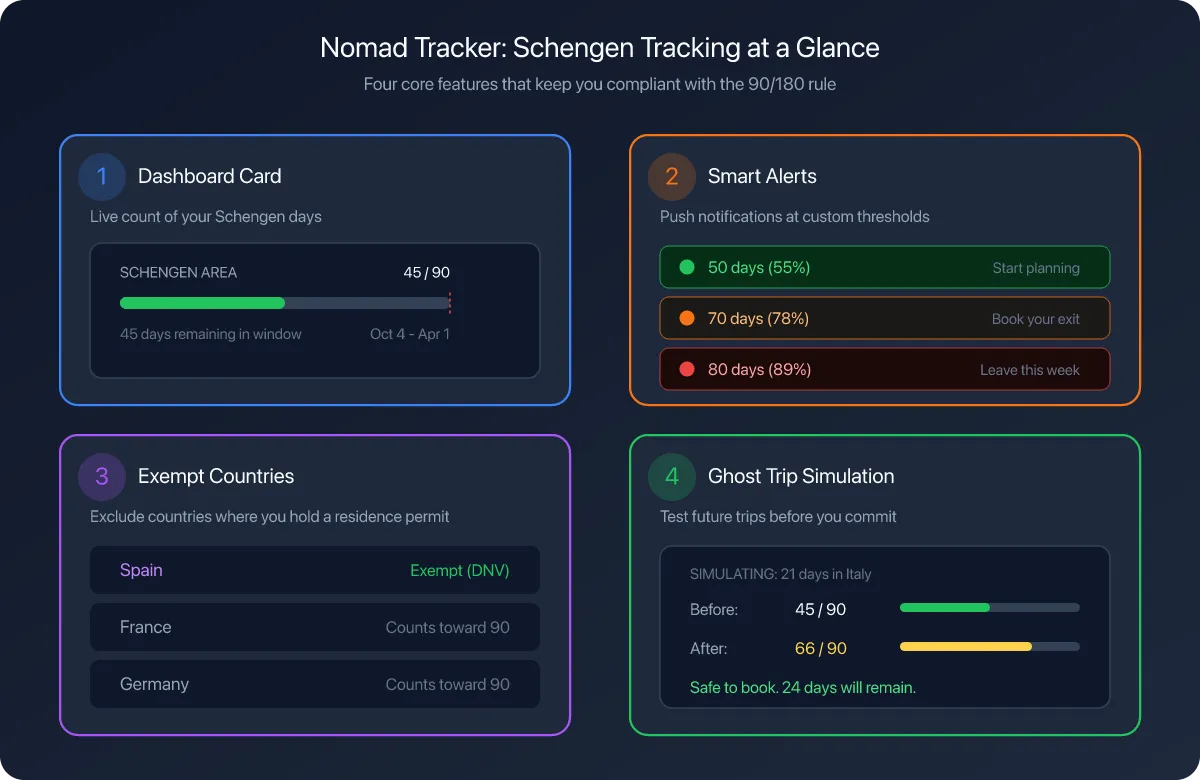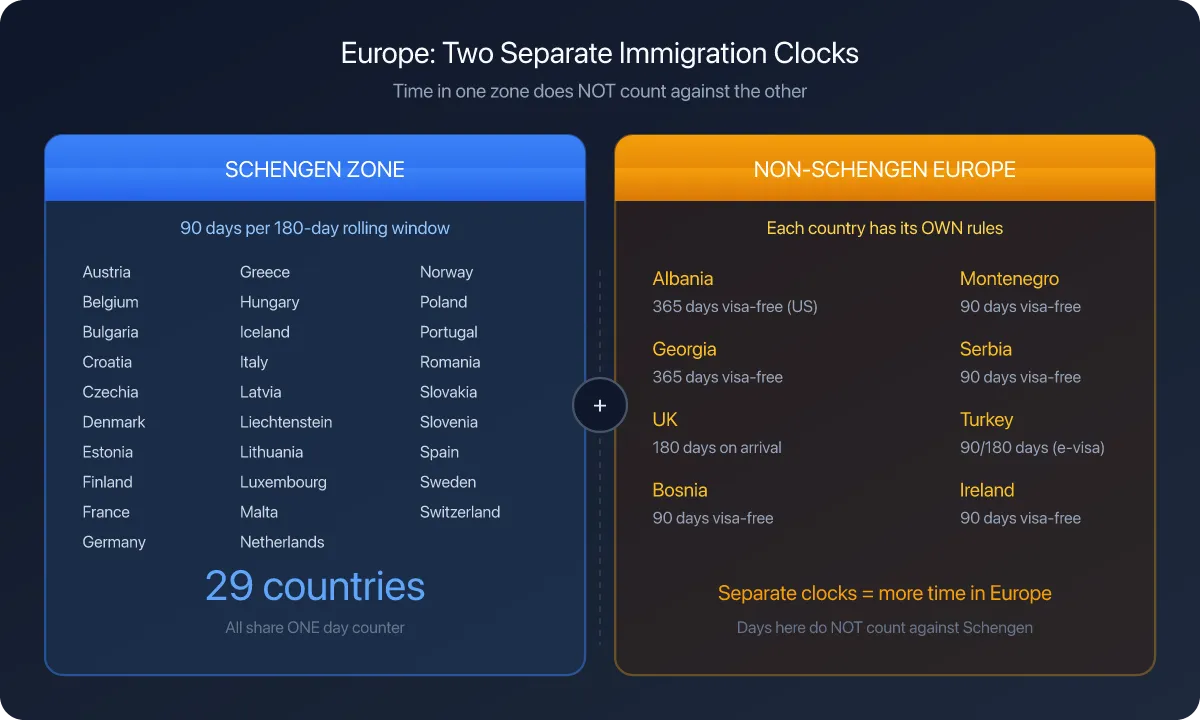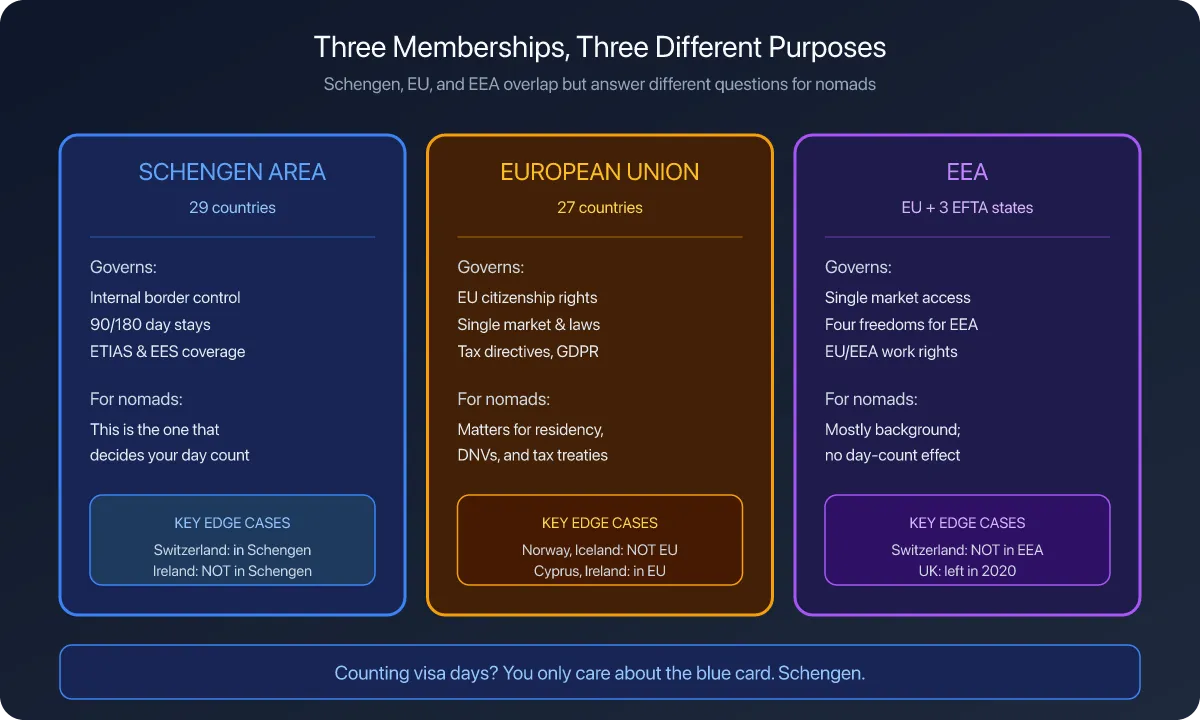
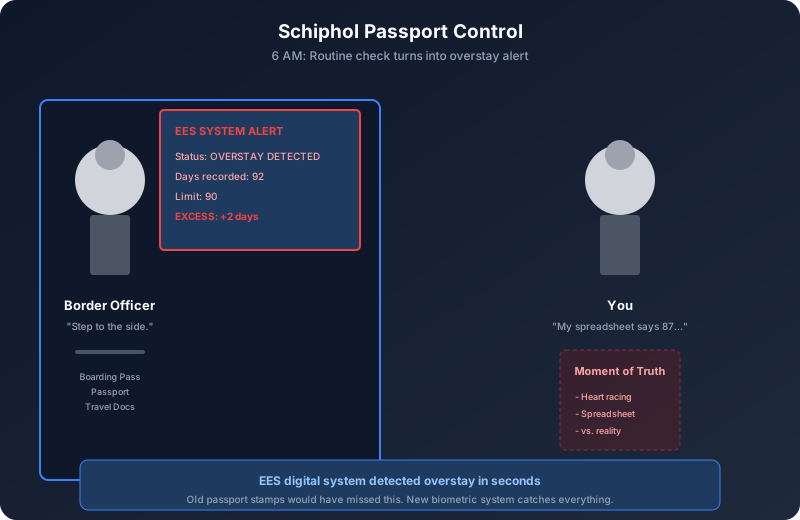
It was 6 AM at Schiphol Airport in Amsterdam. I was standing in the priority lane at passport control, boarding pass in hand, ready to catch a flight to New York. I had been in Europe for just under three months on a tourist visa, bouncing between Spain, France, and the Netherlands. I felt fine about it. My spreadsheet said 87 days.
Then the border officer squinted at his screen, said nothing, and asked me to step to the side.
This is the moment everything changed for me. This is why Nomad Tracker exists.
The 90-Day Calculation That Went Wrong
To this day, I do not know exactly where my count broke. But what the officer told me was clear: the EES system showed 92 days. Not 87. Ninety-two.
I had overstayed the Schengen 90/180 rule by two days.
At that moment, I understood viscerally what I had only understood intellectually before. The 180-day rolling window is genuinely hard to count by hand. Time zones matter. Entry and exit days both count. Weekend trips you think you logged get forgotten. You log "about" the number instead of exact dates. If that window still feels abstract, we walked through the math day by day in our 90/180 rule guide.
The officer could have detained me. He could have issued a fine on the spot. The minimum fine for Schengen overstay is 200 EUR, but two days is minor enough that I was not in the deportation zone. What happened instead was worse in some ways, better in others.
What Actually Happens When They Catch You
The officer explained the situation in careful English. The Entry/Exit System, which went fully live across Schiphol just weeks before, had flagged the overstay automatically. This used to be manual passport stamps that border officers eyeballed. Now it is biometric face scans, fingerprints, and a digital database comparing entry and exit dates with perfect accuracy.
"The old system would not have caught this," he said. "The new system catches everything."
He wrote down a date. I had to leave Europe immediately. Not in two days when my flight was rebooked. Today. Within hours. The choice was mine: take a flight that afternoon, or receive a formal notice of overstay and face a ban.
I took the afternoon flight to New York.
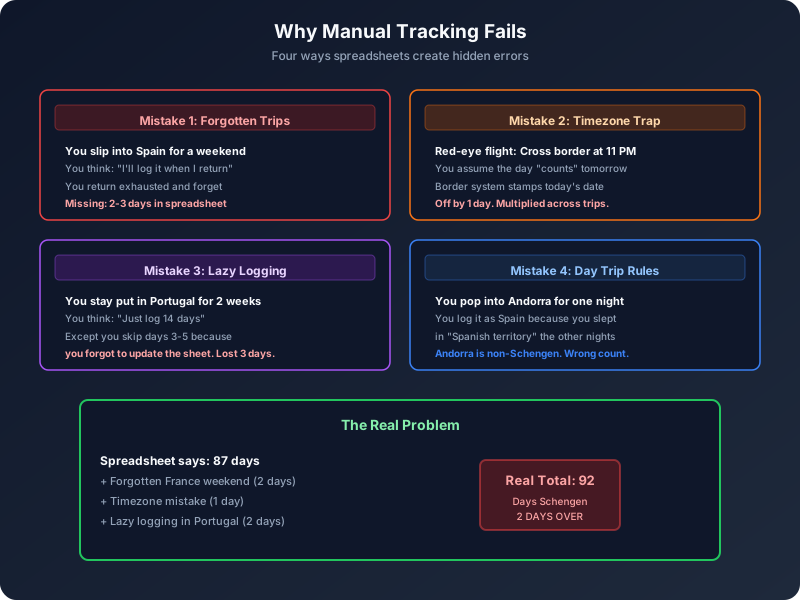
The fine arrived three weeks later by post. 450 EUR. For two days. The officer also explained that had it been a longer overstay, a re-entry ban from the entire Schengen Area (1 to 5 years) was automatic. One mistake, made in a spreadsheet, could have locked me out of 29 countries.
Why Manual Tracking Fails
I had been tracking in a Google Sheet. It was not stupid, it was thorough. I had entries, exits, and calculations. But here is what a spreadsheet cannot do.
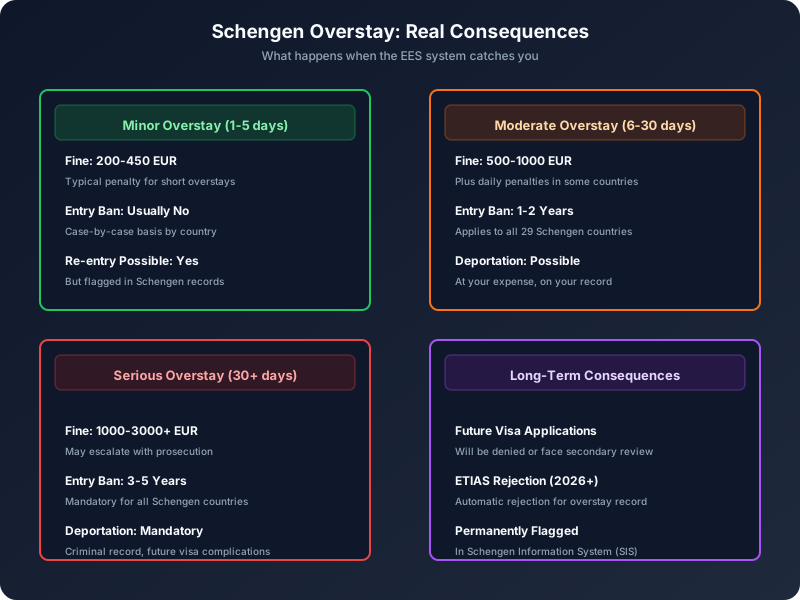
It cannot catch when you arrive on Thursday night, think you arrive Friday, and miscount the full day on entry.
It cannot handle the timezone trap: you cross a border at 11 PM and assume the day changes after midnight. It does not. The entry is recorded on that day's date, regardless of time. You have lost a day against your count.
It cannot remind you that you slipped into Spain for a weekend and forgot to log Sunday because you were tired. That forgotten Sunday eventually adds up to the lost days in my case.
It cannot verify against official records. Your memory is not the source of truth. Biometric fingerprints and facial recognition are.
The Entry/Exit System Changes Everything
What made my situation salvageable was that I was minor offender. But the EES system that caught me also represents a broader shift in enforcement. As of April 2026, manual passport stamping is gone. Every border crossing by a non-EU visitor is biometrically logged in a digital database. Border officers no longer squint at passport stamps. They pull up your exact entry and exit date from a computer. What that changed at each individual border is a longer story, and we went through it country by country in our read on Schengen enforcement after EES.
The system flagged more than 4,000 travelers for overstaying in the Schengen Area in just the first few months of 2026. That number will only grow as border officers get faster at reading the alerts.
Overstaying is no longer something you might get away with. It is something you will be caught for, electronically, within seconds of showing your passport.
The days of vague passport stamp counting are over. Precision is now the only option.
What I Should Have Done
I spent the next six months building a system that would have prevented this. It became Nomad Tracker.
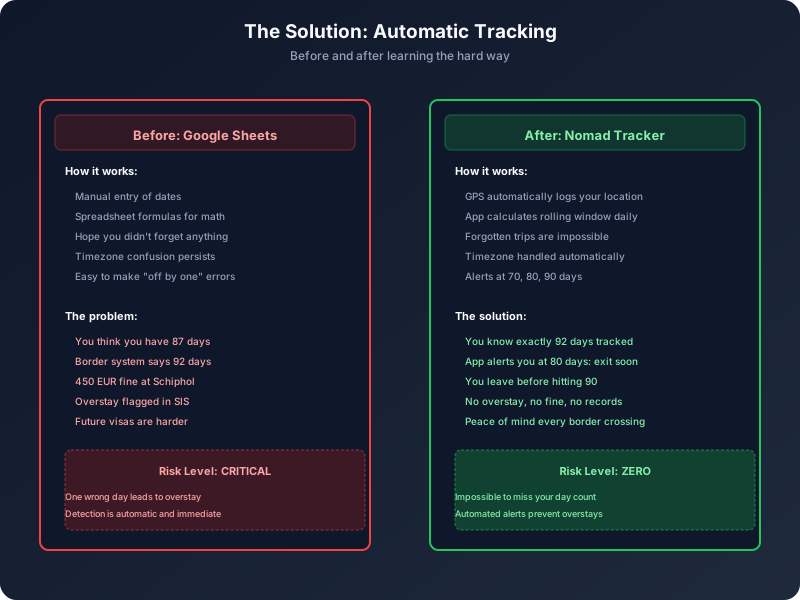
The core insight was simple: stop relying on memory and spreadsheets. Use your phone to track location changes automatically. Use GPS to log which country you are in, every day, without manual entry. Let a computer do the rolling 90/180 window calculation. No human math. No forgotten days. No timezone confusion.
Let the app watch your Schengen days in real-time. Alert you at 70 days, alert you at 80 days. Never let you hit 90 and overstay.
The Fallout
The 450 EUR fine stung, but it was not the worst part. The worst part was the scarlet letter. The overstay was recorded in the Schengen Information System, visible to every border officer in every Schengen country. When I applied for a visa to Spain three months later, my application was flagged for secondary review. "Previous overstay noted." It was approved, but it took four weeks instead of two.
The second-order consequences are real. If I had overstayed by 30 days instead of two, I would have faced a five-year re-entry ban. That would have meant no Europe for five years. No Portugal slow travel. No Spanish taxes. No visa strategies across the continent. We later published a separate first-person account of what a three-day overstay actually costs, fine, permanent record and all.
All for a spreadsheet error.
This Is Why Tracking Matters
Most digital nomads do not think about their day count until they are in trouble. The math seems easy until you have been traveling for 18 months. Then it is impossibly complicated. You cannot remember if you went to Andorra on March 15 or March 17. You cannot recall if you crossed into France at 8 AM or left it at 8 PM. The rolling window math is non-trivial even for careful people.
The stakes are not low. The Entry/Exit System is here. Border officers have algorithmic precision on their side now. If you overstay by even one day, you will be caught. And you will face fines, entry bans, and complications for future travel.
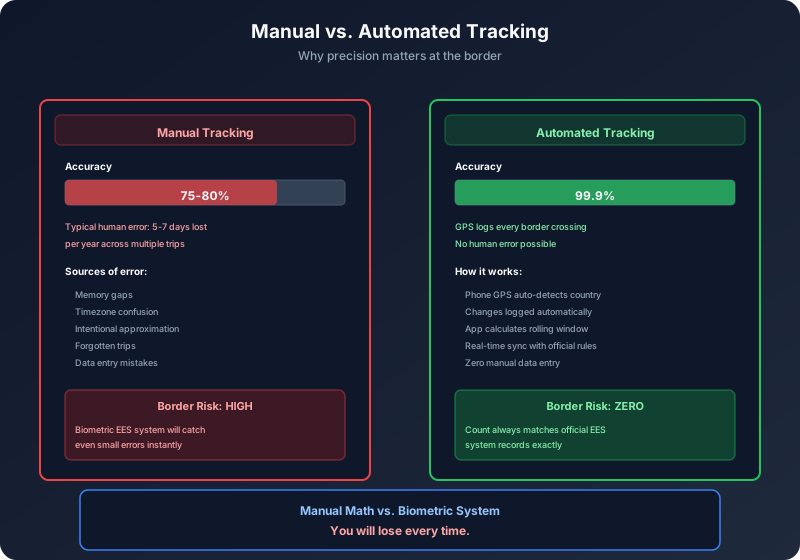
The solution is to stop relying on memory entirely. Let technology do the counting. Let GPS log your location. Let an app calculate the rolling window. Let alerts tell you when you are close to a limit.
The Lesson
Standing in that passport control lane at Schiphol, with the officer's calm voice explaining my overstay, I had a moment of total clarity. I had built a career around location independence and visa management. I wrote about it, advised others on it, thought I was an expert.
And I almost got deported because I was too lazy to use a proper system.
That embarrassment became fuel. The next six months of work on Nomad Tracker were driven by the specific pain of that moment. Every feature came from a mistake I made, or a mistake I watched others make. Real-time alerts, GPS tracking, fiscal residency monitoring, Ghost Trips for future planning. All of it came from thinking about what would have prevented this.
The 450 EUR fine was expensive. The flight home was expensive. But the lesson was free.
Now I do not think about my days. My phone tracks them. The app alerts me. I sleep at night knowing I will never stand in that passport control lane again.
Never miscalculate your visa days again.
Nomad Tracker uses GPS to automatically track your days in each country, calculates Schengen limits in real-time, and alerts you before you hit limits. Designed by someone who learned the hard way.
Download on the App Store