Five years ago, the idea of a visa specifically designed for remote workers barely existed. Barbados launched the Welcome Stamp in 2020, and a handful of Caribbean islands followed. Fast forward to 2026, and over 55 countries now offer some form of digital nomad visa. The landscape has changed completely.
But here is the problem: more options does not mean easier decisions. Every program has different income thresholds, tax implications, durations, and renewal paths. Some are genuinely excellent deals. Others look great on paper but create tax headaches that wipe out any benefit.
I have spent months digging into the details of every active digital nomad visa program so you do not have to. This guide covers the real numbers, the hidden catches, and the programs that actually make sense depending on your situation.
What Exactly Is a Digital Nomad Visa?
A digital nomad visa is a temporary residence permit that lets you live in a country while working remotely for employers or clients based elsewhere. The core idea is simple: you bring your income from outside, spend it locally, and in exchange the country gives you legal status beyond a standard tourist visa.
Most programs share a few common requirements: proof of remote income above a minimum threshold, valid health insurance, a clean criminal record, and a passport with at least six months of validity. Beyond those basics, the details vary wildly.
Europe: The Most Competitive Market
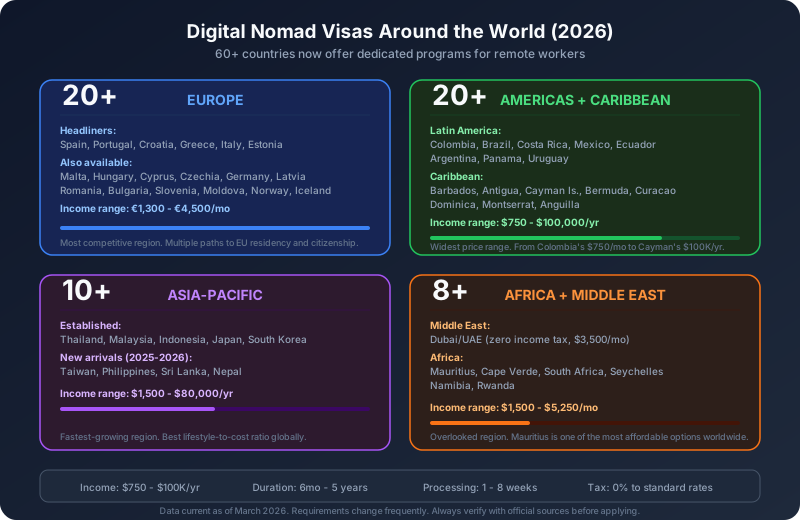
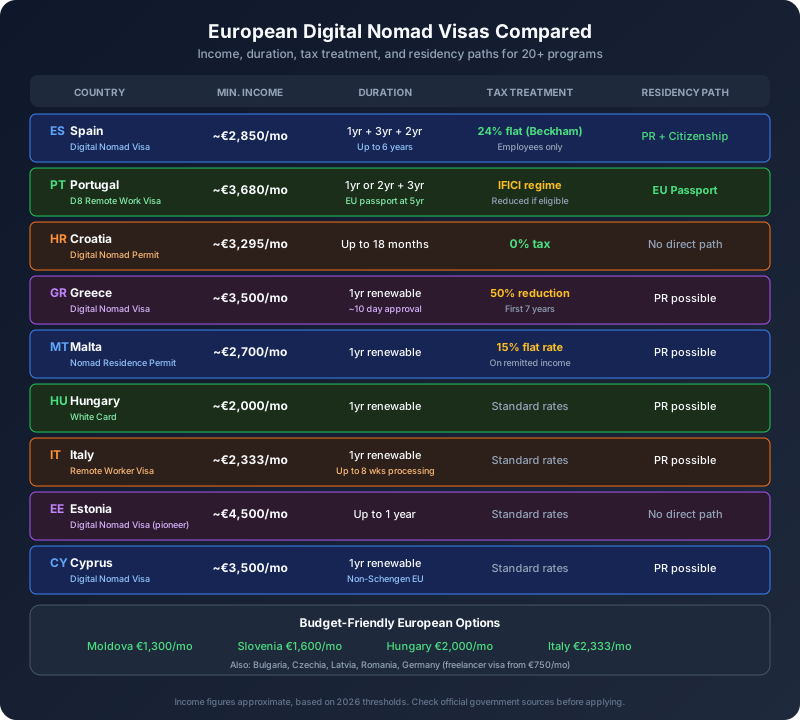
Europe is where the real arms race is happening. Over 20 European countries now offer dedicated nomad visa programs, and they are competing hard for remote workers. Here are the standout options.
Spain: The Overall Best Package
Spain's Digital Nomad Visa has quickly become the gold standard, and for good reason. The combination of lifestyle, infrastructure, and tax benefits is hard to beat anywhere.
The visa requires a minimum monthly income of roughly €2,850 (200% of Spain's minimum wage), and you need to work remotely for non-Spanish companies or, if freelancing, earn no more than 20% of your income from Spanish clients. The initial visa lasts one year, after which you apply for a three-year residence permit that can be extended for another two years.
The real kicker is the Beckham Law. Eligible employees can pay a flat 24% tax rate on Spanish-sourced income (instead of the standard progressive rate that climbs to 47%) for up to six years. One important caveat: the Beckham Law primarily applies to those employed by a Spanish entity, so most freelancers will not qualify. And you must apply within six months of registering with Spanish Social Security. Miss that window and you lose the benefit entirely.
Portugal: The Residency Play
Portugal's D8 visa is the go-to choice if your long-term goal is European residency or citizenship. The income requirement sits at roughly €3,680 per month (four times Portugal's minimum wage), which is higher than Spain, but the path it opens is compelling.
You can choose between a short-term one-year stay or a full residence route. The residence path starts with a four-month entry visa, then converts to a two-year permit renewable for three more years. After five years of continuous residency, you can apply for permanent residency or Portuguese citizenship. That is an EU passport, which changes the entire equation for non-EU nationals.
The tax picture got more complicated after Portugal ended its Non-Habitual Resident (NHR) regime. The replacement program, IFICI, offers reduced rates for qualifying newcomers, but it is considerably more restrictive than the regime it replaced. Budget roughly €300 to €600 in application and permit fees.
Croatia: Tax-Free in the EU
Croatia stands out for one reason above all others: digital nomad visa holders pay zero local income tax on foreign earnings. None. For an EU country with Adriatic coastline, reliable internet, and a cost of living well below Western European averages, that is a remarkable deal.
The income requirement is €3,295 per month (or €39,540 in savings for a full stay). The permit lasts up to 18 months, and while it does not lead directly to permanent residency, it is an excellent medium-term base. Zagreb and Split both have thriving nomad communities, and the quality of life per euro spent is among the best in Europe.
Greece: Sun and Simplicity
Greece requires €3,500 per month in pre-tax income and grants a one-year visa with renewal options. The application process is relatively straightforward, with approvals typically coming through in about 10 days. Greece offers a 50% income tax reduction for qualifying remote workers during their first seven years, making the effective tax burden quite reasonable.
Other Notable European Programs
Europe has the deepest bench of any region. Beyond the headliners above, here is a broader look at what is available.
Estonia was a pioneer in this space and requires roughly €4,500 per month. The application process is streamlined and can be started online, though it is worth separating the nomad visa from e-Residency, which grants no right to live there at all. Italy launched its program more recently with a lower bar of about €28,000 annually (roughly €2,333 per month), though the bureaucracy can be slower. Germany does not have a specific nomad visa but offers freelancer visas with a surprisingly low income floor of €9,000 per year, though you will need to navigate German tax obligations.
Malta ranks in the top five globally and offers a Nomad Residence Permit for remote workers earning at least €2,700 per month, with a flat 15% tax rate on remitted income and a 12-month renewable stay. Hungary has risen quickly in the rankings thanks to its White Card program: €2,000 per month income, one-year duration, renewable, and Budapest offers some of the best value in Central Europe. Cyprus requires roughly €3,500 per month and grants a one-year visa that can be renewed, with its position outside the Schengen zone as a bonus for those managing Schengen day counts.
Czechia (Prague in particular is a nomad magnet) offers a freelancer visa requiring proof of financial stability. Latvia and Romania both have programs with income thresholds in the €2,500 to €3,000 range. Bulgaria, which officially introduced its digital nomad visa in late 2025, is one of the cheapest places to live in the EU.
The newest entrants, Slovenia (€1,600/month) and Moldova (€1,300/month), are attracting budget-conscious nomads looking for European bases. Norway and Iceland offer options too, though the high cost of living offsets the Scandinavian quality of life for many nomads.
The Americas and Caribbean: Budget-Friendly to Premium
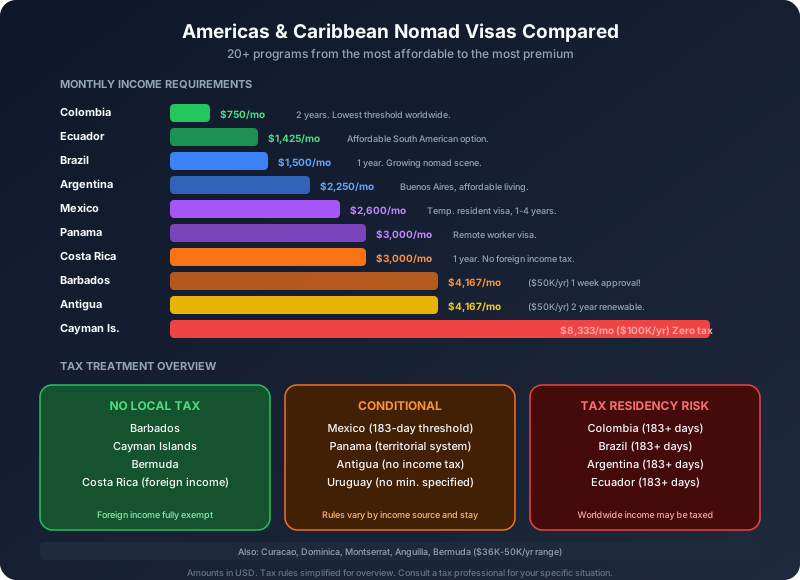
The Americas offer the widest range of price points, from Colombia's incredibly accessible program to the Cayman Islands' six-figure requirements.
Colombia: The Most Accessible Option
At roughly $750 per month in minimum income, Colombia has the lowest entry barrier of any digital nomad visa worldwide. The visa allows a two-year stay, and cities like Medellin and Bogota have well-established nomad infrastructure with coworking spaces, fast internet, and affordable living costs. The catch? Colombia will tax you on Colombian-sourced income, and if you stay more than 183 days in a calendar year, you become a tax resident subject to worldwide income taxation.
Costa Rica: For the Long Haul
Costa Rica's program targets higher earners, requiring roughly $3,000 per month or $60,000 in annual income. The visa lasts one year with renewal options. Costa Rica does not tax foreign-sourced income for nomad visa holders, which is a significant plus. The country's strong expat infrastructure, reliable healthcare system, and natural beauty make it a perennial favorite, though the cost of living in popular areas like San Jose and Tamarindo has risen notably over the past two years.
Mexico: The Informal Route
Mexico does not have a formal digital nomad visa, but its Temporary Resident Visa serves a similar purpose. You will need to demonstrate roughly $2,600 per month in income or $43,000 in savings. The visa lasts one year and is renewable for up to four years. Mexico's biggest draw is the combination of proximity to US time zones, low cost of living outside major tourist areas, and an enormous nomad community. The tax situation is complex, though. Spending more than 183 days triggers potential tax residency, and enforcement has been tightening.
Caribbean Highlights
The Caribbean islands pioneered this category and continue to offer attractive packages, particularly for those who do not mind higher income floors.
Barbados (Welcome Stamp) requires $50,000 in annual income, processes applications in as little as one week, and charges no local income tax. Antigua and Barbuda offers a two-year renewable visa at $50,000 annual income with fees of $1,500 for individuals. The Cayman Islands sits at the premium end, requiring $100,000 for singles or $150,000 for couples, but offers a two-year stay in a zero-tax jurisdiction. Bermuda, Curacao, Dominica, Montserrat, and Anguilla all have their own variations, generally in the $36,000 to $50,000 annual income range.
Also worth mentioning: Brazil offers a digital nomad visa at roughly $1,500 per month, making it one of the more affordable options in Latin America alongside Colombia. Ecuador comes in at about $1,425 per month. Argentina requires around $2,000 to $2,500 per month, and Panama has a remote worker visa for those earning $3,000 or more monthly. Uruguay is another option, though it does not specify a minimum income threshold.
Asia-Pacific: The Emerging Contenders
Asia has been slower to formalize nomad visa programs, but the options available in 2026 are increasingly competitive.
Thailand: Multiple Paths
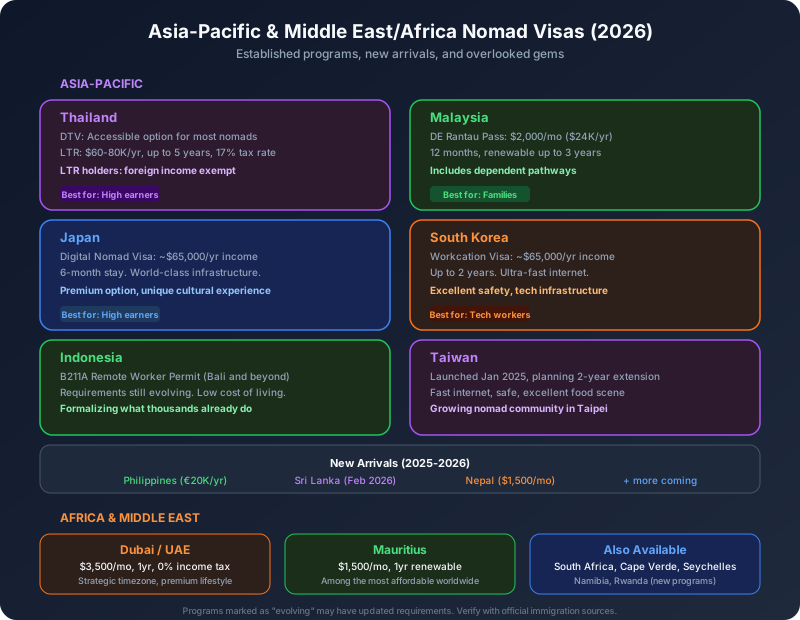
Thailand offers two main routes. The Destination Thailand Visa (DTV) is the more accessible option, designed for remote workers and digital nomads with a simpler application process. For higher earners, the Long-Term Resident (LTR) visa offers up to five years of residency, but the income threshold is steep at $60,000 to $80,000 annually. The LTR includes a reduced 17% tax rate on Thai-sourced income and exemption from foreign income tax. Both deserve a closer look before you pick one: we covered the DTV in a complete guide and the LTR's tax reputation in an honest breakdown.
Thailand remains one of the most popular nomad destinations regardless of visa type, thanks to the unbeatable combination of low living costs, excellent food, fast internet in urban areas, and a massive international community.
Malaysia: The DE Rantau Pass
Malaysia's DE Rantau program is well-designed and affordable. It requires $24,000 in annual income (just $2,000 per month), grants a 12-month stay renewable for up to three years, and includes dependent pathways. Kuala Lumpur offers world-class infrastructure at a fraction of what you would pay in Singapore or Hong Kong. Penang and Langkawi are popular alternatives for those who prefer a slower pace.
Indonesia: Bali and Beyond
Indonesia launched its dedicated remote worker visa to formalize what thousands of nomads were already doing in Bali on tourist visas. The B211A remote worker permit allows extended stays, though the specifics around income requirements and tax treatment continue to evolve. Bali's appeal is obvious, but rising costs in Canggu and Ubud have pushed many nomads toward less saturated areas like Lombok or even Java.
Japan and South Korea: The Premium Asian Options
Japan officially launched its digital nomad visa in 2024, targeting high earners with an annual income requirement of roughly ¥10 million (about $65,000). The visa allows a six-month stay. It is not the longest or cheapest option, but for those who want to experience Japan beyond the 90-day tourist visa, it opens a door that was previously closed. South Korea offers a Workcation visa (K-ETA based) that lets remote workers stay for up to two years, with an income requirement of roughly $65,000 annually. Both countries offer world-class infrastructure, safety, and internet speeds.
Newer Asian Programs
Taiwan introduced its digital nomad visa in early 2025 and is planning to extend the duration to two years. The Philippines launched its program in mid-2025 with a €20,000 annual income requirement, making it one of the more affordable Asian options, especially given that English is widely spoken. Sri Lanka activated its Digital Nomad Visa portal in February 2026, making it the freshest option on this list. Nepal is also set to launch its program in early 2026, with a very accessible $1,500 monthly income threshold.
Africa and the Middle East: The Overlooked Options
This region gets less attention in the nomad community but has some genuinely interesting programs.
Dubai (UAE) offers a one-year Virtual Working Program for remote workers earning at least $3,500 per month. The appeal is obvious: zero income tax, world-class infrastructure, and a strategic timezone that overlaps with both European and Asian business hours. The cost of living is the main downside, as Dubai is not cheap, but for high earners the tax savings can more than offset it.
Mauritius launched its Premium Visa program allowing stays of up to one year (renewable) for remote workers earning at least $1,500 per month. It is one of the most affordable options globally, and Mauritius offers political stability, English and French as official languages, and beautiful natural surroundings. Cape Verde has a similar remote work visa with accessible requirements, positioned as an Atlantic gateway between Europe and the Americas.
South Africa finally operationalized its Remote Work Visa regulations in late 2025, requiring proof of employment with a foreign company and an annual income of roughly $63,000. Seychelles rounds out the African options with a program that does not specify a minimum income, though the high cost of island living acts as its own filter.
Namibia and Rwanda have also introduced or announced nomad-friendly visa programs, reflecting a broader trend across the continent.
How to Choose the Right Visa for Your Situation
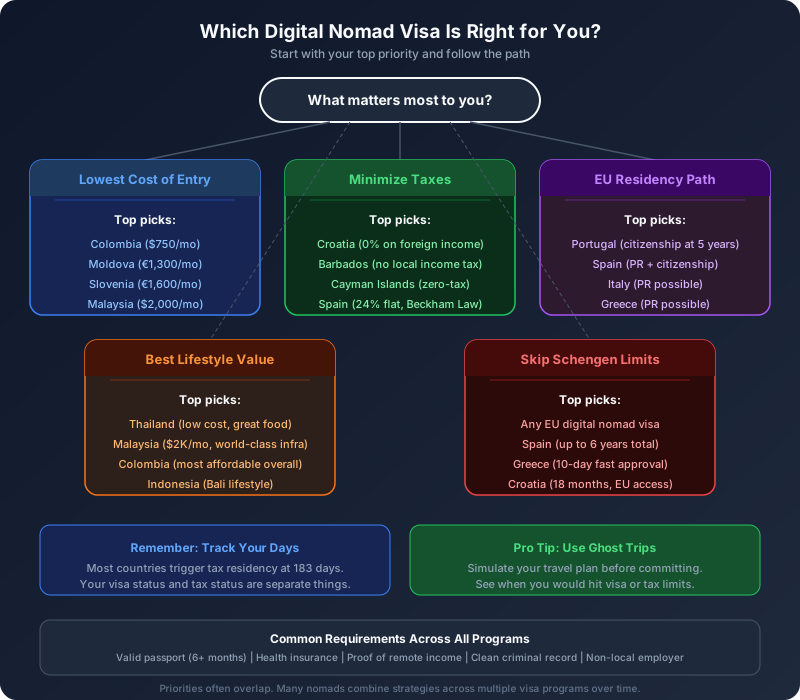
With this many options, the right choice depends entirely on your priorities. Here is how to think through it.
If you want the lowest cost of entry, Colombia ($750/month), Moldova (€1,300/month), or Slovenia (€1,600/month) have the most accessible income thresholds. These are strong choices if you are early in your remote career or earning in a currency that does not stretch far in Western Europe.
If you want to minimize taxes, Croatia (0% on foreign income), Barbados (no local income tax), and the Cayman Islands (zero-tax jurisdiction) let you keep more of what you earn. Spain's Beckham Law is also powerful if you qualify as an employee.
If you want a path to permanent residency or citizenship, Portugal's D8 visa is the clearest route to an EU passport within five years. Spain also offers a residency pathway, though citizenship takes longer (10 years for most nationalities, 2 years for Ibero-American nationals).
If you want to maximize time in Europe without Schengen headaches, any EU digital nomad visa removes you from the 90/180 day calculation. Your visa days do not count against your Schengen allowance, which is a massive benefit for non-EU passport holders who want to spend extended periods in Europe. Days in every other Schengen country still count, though, so it helps to understand how the 90/180 rule works before you rely on the exemption.
If you want the best lifestyle-to-cost ratio, Thailand, Malaysia, and Colombia consistently top the rankings. Your money goes furthest in these countries while still getting reliable internet, good healthcare access, and established nomad communities.
The Fine Print Nobody Reads
Before you apply for any digital nomad visa, there are a few things worth keeping in mind.
Tax residency is not the same as visa status. Having a digital nomad visa does not automatically make you a tax resident, but spending enough days in a country often does. The 183-day threshold is common but not universal. Some countries (like Spain) can claim you as a tax resident based on your "center of vital interests" even if you spend fewer than 183 days there. Spain's three separate residency tests are the clearest example of how little the day count settles on its own.
Your home country still matters. US citizens are taxed on worldwide income regardless of where they live. Many other countries have departure tax rules or continued obligations for recent emigrants. A nomad visa does not erase your existing tax relationships.
Health insurance requirements are real. Most programs require proof of valid health insurance as part of the application. Travel insurance often does not qualify. Budget for proper international health coverage, which typically runs $75 to $200 per month depending on your age and coverage level.
Processing times vary wildly. Barbados can approve you in a week. Portugal might take two months. If you need to be somewhere by a specific date, start the application process early and have a backup plan.
The Landscape Is Still Changing
New programs launch every few months. Nepal, Sri Lanka, and Bulgaria are the latest additions, and more countries are watching the economic data from early adopters. At the same time, existing programs are evolving. Income thresholds get adjusted, tax treatments change, and some countries that were lax about enforcement are getting stricter.
The single most important thing you can do is track your days carefully. Whether you are juggling Schengen limits, monitoring the 183-day tax threshold, or making sure you meet minimum stay requirements for your visa renewal, knowing exactly where you have been and for how long is not optional. It is the foundation everything else sits on.
Track every day, in every country, automatically.
Nomad Tracker monitors your Schengen days, tax residency thresholds, and visa limits in real time. Use Ghost Trips to simulate future travel before committing, and set alerts so you never accidentally trigger tax obligations. All on-device, all private.
Download on the App Store