There is a specific flavor of stomach drop you feel when a German border officer flips through your passport, looks up slowly, and asks you to step aside.
I know it well. I earned it by overstaying Schengen by three days.
This is the honest version of that story. Not the Reddit version where someone "got away with it" and now writes confident comments about how the whole thing is overblown. Not the doom version either, where every overstay ends in deportation and a lifetime ban. The actual thing that happens to a regular nomad who miscounts by 72 hours, with the fine, the paperwork, and the follow-on consequences that show up months later.
If you are reading this because you are worried about your own count, skip ahead to the "what actually happens" section. If you have time, start from the top. The backstory is where most of the useful lessons are.
How I Ended Up 3 Days Over
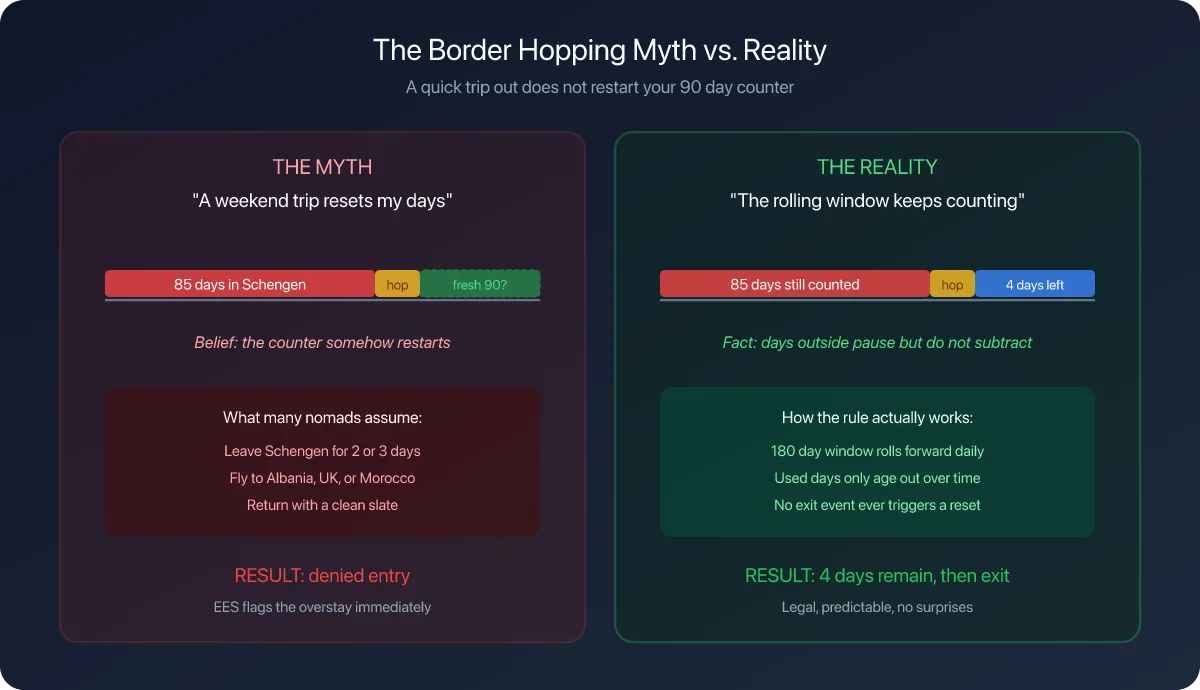
I was on the "90 in, 90 out" pattern, more or less. Spent January through most of March in Portugal and Spain, left for Albania in early April, came back in late June. The plan was to burn the rest of my remaining days through August, then pop over to the UK for a few weeks before my next Schengen window opened. On paper that is the one exit pattern that actually works, for the reasons set out in the border hopping reset myth.
The math had been in a Google Sheet since 2023. Three tabs. One for trips, one for a rolling calculation I half-understood, one for notes. It had worked fine for two years. I had survived at least four nomad tax scares and one aggressively curious Italian border officer with that spreadsheet.
What killed me was a single date.
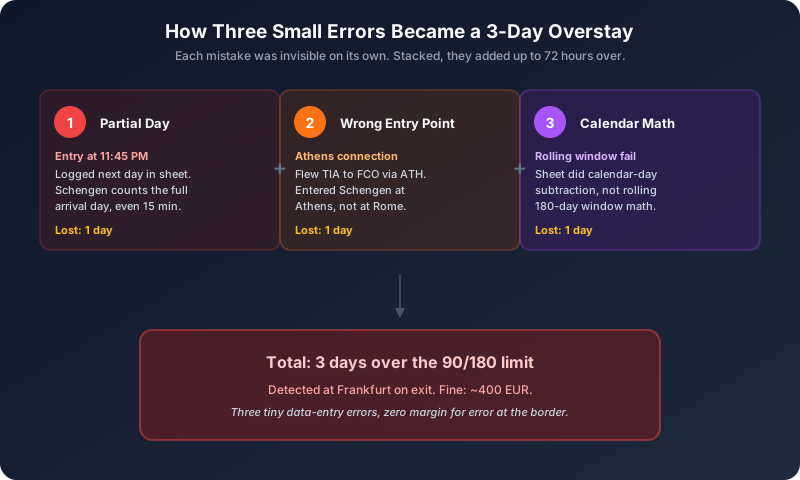
When I entered Portugal in late January, I used a boarding pass timestamp to log the entry date. The flight landed at 11:45 PM local time. I wrote down the next day in the sheet, figuring I barely spent any time in-country before midnight. This is wrong. Schengen rules count partial days as full days. The day you arrive is day one, even if you only spent forty-five minutes in the zone.
That was my first lost day.
The second came from the way my sheet handled the June re-entry. I had flown from Tirana to Rome with a connection in Athens. Athens is Schengen. Rome is Schengen. Technically I entered Schengen when I stepped off the plane at Athens, not when I cleared passport control in Rome. I had logged the Rome date. That was my second lost day.
The third was just me being sloppy. I had rounded a calculation on a small border hop in May and the sheet agreed with me because it was doing calendar-day subtraction, not actual Schengen math with a rolling window. The difference between those two sums is the whole of the 90/180 rule.
Three tiny errors, each invisible on its own, stacked into a 72-hour overstay that I did not know about until I was standing at a counter in Frankfurt.
The Moment at the Border
Frankfurt, late August. Connecting flight to London. My plan was to clear passport control, grab a beer, board. Routine.
The officer took my passport, tapped at the keyboard, paused. Tapped again. Then the look. Anyone who has travelled knows the look. It is not aggressive. It is just the absence of the half-second smile you usually get before they hand the passport back.
"Can you come with me, please."
I followed him to a side room. Nothing dramatic. A counter, two chairs, a second officer, a printer that looked older than I was. He explained, slowly and in good English, that my last recorded Schengen entry was on a date I did not quite remember, and that as of today I had been in the zone for 93 days within the rolling 180-day window.
I did the thing every overstayer does. I started building a mental case for why this was not my fault. The flight delay. The timezone confusion. The connection in Athens. I got about halfway through the first sentence before I realized none of it mattered. The system does not care about your reasons.
What followed was roughly ninety minutes of paperwork. They asked for my return ticket, my onward itinerary, my accommodation history, my purpose of travel, and whether I had previously overstayed. I answered everything honestly. I did not try to argue the math, which is the single most important thing I did right that day.
The Fine, The Paperwork, and What Went on My Record
Germany's fine range for overstay runs from around 50 to 3,000 euros, scaled roughly by days and perceived intent. For a three-day overstay with a cooperative traveler, no prior record, and a clear onward flight, I got issued a fine at the lower end of the range. Around 400 euros. Payable on the spot via card.
There was a form. I signed it. It acknowledged the overstay, the fine, and confirmed that I understood I was being permitted to depart on my booked flight rather than being formally deported.
Here is the thing nobody tells you. The fine is not the real consequence. The fine is just the paperwork version of the consequence. The actual consequence is the entry in their system.
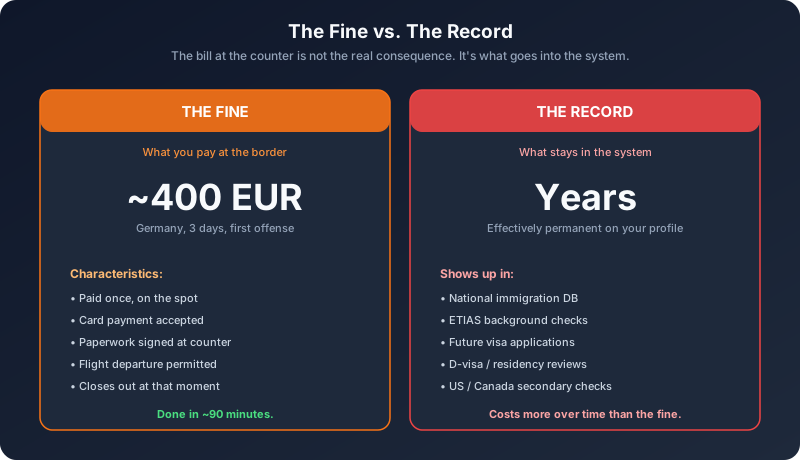
Three things happen on the record side:
The first is an entry in the national immigration database, in my case Germany's. This is where the "caught" part lives.
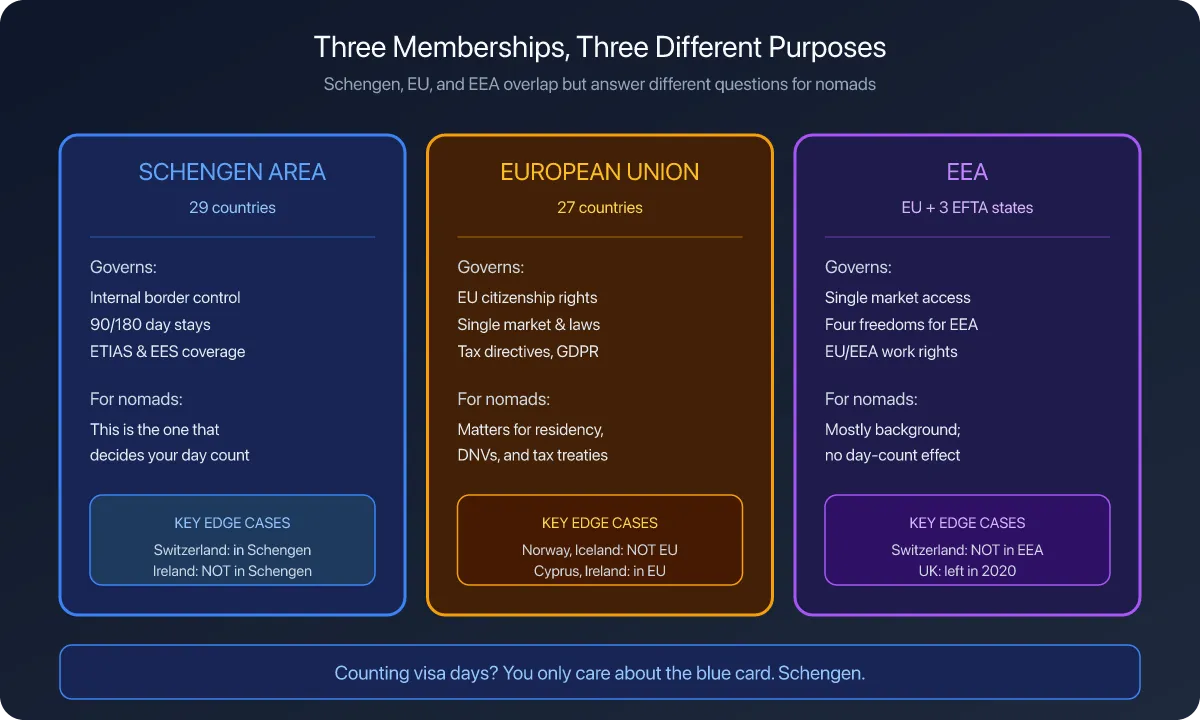
The second, depending on the country and the severity, is a possible flag in the Schengen Information System (SIS II), which is shared across all 29 Schengen countries. For three days without any other issues, I did not get a SIS alert. This is the main reason I did not get a formal entry ban.
The third is the most insidious. Any future ETIAS application, visa application, long-stay residency permit, or background check that touches Schengen databases can pull this record. It does not disappear when you pay the fine. It does not time out quickly. It sits there, waiting to be relevant.
Did I Get Banned? What Actually Happens
I need to be precise here because this is where most online advice falls apart.
A formal entry ban is a specific legal instrument. It is issued when the overstay is considered serious enough to warrant it, which typically means longer overstays (think multiple weeks), repeat offenses, or overstay combined with working illegally, fraud, or criminal activity. Entry bans range from 1 year to 5 years and, when entered into SIS II, apply to all 29 Schengen countries simultaneously.
For a 3-day overstay with no other issues, in Germany, I did not get a formal ban. I got the fine, the record, and permission to leave.
But "no ban" does not mean "no consequences." The next six months were a slow drip of unpleasant surprises:
My ETIAS application, when I filed it the following year, got pulled for manual review instead of being auto-approved. It was eventually granted, but the waiting period was roughly six weeks instead of minutes.
My US-Canada tourist entries started including longer secondary questioning. Border officers can see the same kinds of immigration records, and an overstay in Europe is the kind of thing that flags.
When I applied for a long-stay D-visa for Spain two years later, I had to disclose the overstay, provide the German paperwork, and write a statement explaining what happened. That application was eventually approved too, but the extra review added two months to the process.
None of this is catastrophic. All of it is annoying. And the cumulative cost in time, stress, and visa friction has already exceeded the 400-euro fine by a wide margin.
What EES and 2026 Changed
Here is where the story stops being a personal anecdote and becomes general advice.
Before April 10, 2026, Schengen entry and exit enforcement was uneven. Some countries stamped thoroughly, some did not. Officers sometimes missed or mis-stamped dates. The whole system relied on a mix of paper stamps, inconsistent national databases, and the discretion of the officer in front of you. A surprising number of overstays went unnoticed for years, sometimes forever, because the paper trail was simply not good enough to catch them in real time.
That is over. As of April 10, 2026, the Entry/Exit System (EES) is fully operational across all Schengen external borders. Passport stamps are gone. Every non-EU entry and exit is registered in a centralized biometric database, with fingerprints, a facial scan, and exact timestamps.
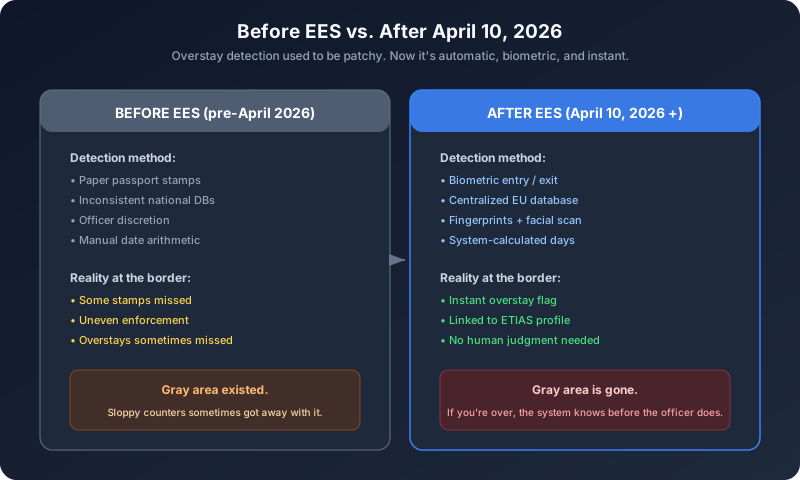
The practical implications are significant:
Overstays are now detected automatically, in real time, the moment you scan your passport at any border. No human review required. No "the officer didn't notice" luck.
The calculation is done by the system, not by you and not by the officer. If the system says you are over by one day, you are over by one day. There is no negotiating with a database.
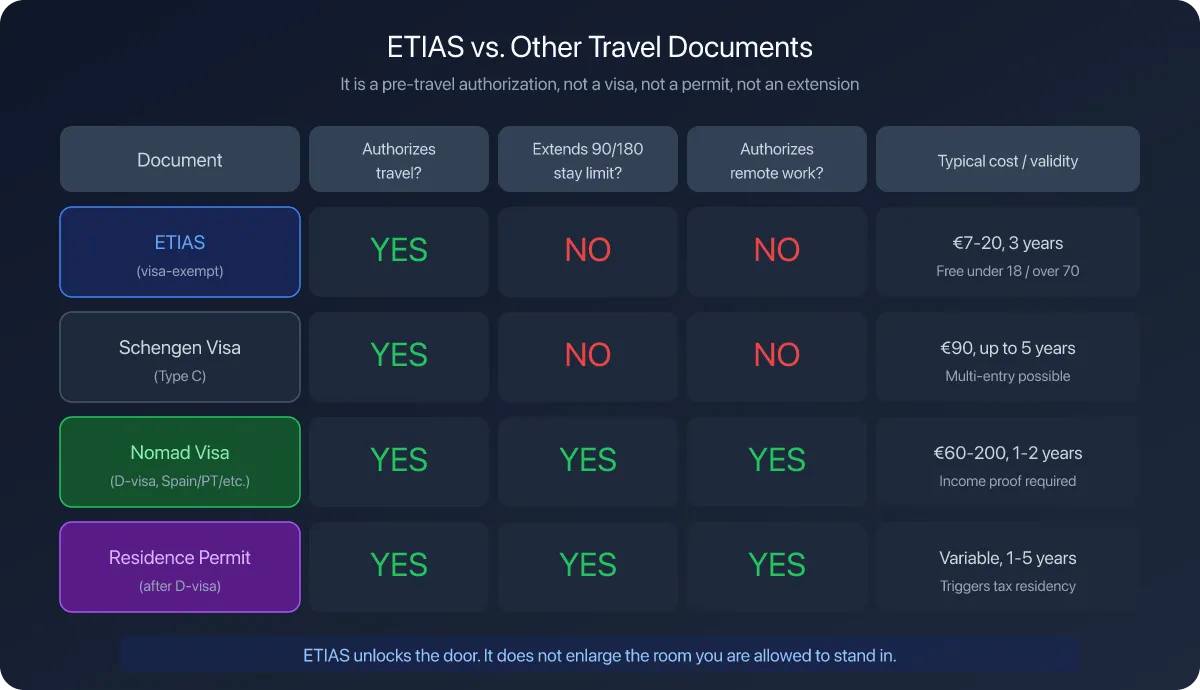
ETIAS, which launched for visa-exempt travelers alongside EES, is electronically linked to this record. An EES overstay will appear in your ETIAS profile for years.
In short: the margin for sloppiness is zero now. The gray area where small overstays went unnoticed has effectively closed. If you walked into 2024 with imprecise tracking and got lucky, 2026 is not going to extend that luck.
What Varies By Country
Even with EES centralizing detection, the consequences still depend heavily on which country catches you. We went through the full picture in our country-by-country guide to Schengen enforcement, but the short version is worth having here, because it affects how you plan your exits:
Germany tends to be methodical. Fines proportional to overstay days, paperwork, records, usually no formal ban under a week. Officers are generally firm but not hostile.
Spain has higher fines on paper (starting around 501 euros and going up to 10,000 for serious cases) but in practice short overstays often see lower-end penalties. They take it seriously, especially with repeat travelers.
France treats longer overstays aggressively. For 45-plus day overstays, fines run around 2,500 euros with higher risk of detention, deportation, and a formal 5-year ban. Short overstays typically end with a fine and a warning.
Netherlands fines up to around 1,500 euros and are known for being strict at Schiphol, which is one of Europe's busiest external border airports. Schiphol specifically has a reputation for thorough checking.
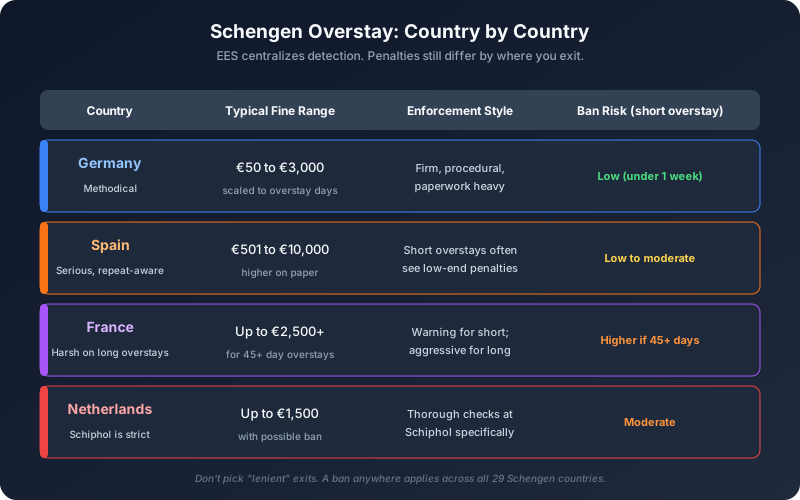
If you are going to be caught (and with EES you will be), which border you exit through matters. This is not a reason to try to game the system by picking lenient borders. That is a different kind of trouble. It is a reason to make sure your exits are under control regardless of where they happen.
What I Actually Learned
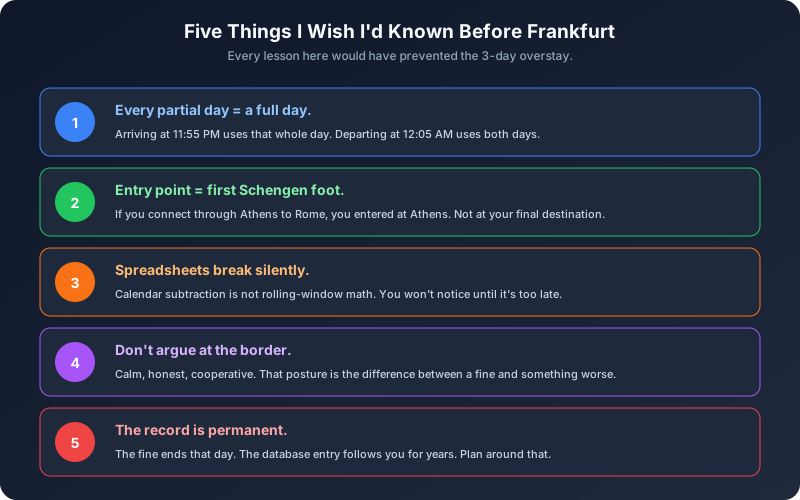
A few things I wish I had known before Frankfurt:
Every partial day counts as a full day. Midnight is the boundary. If you cross at 11:55 PM, that whole day counts. If you depart at 12:05 AM, both the previous day and the current day count. Build this into your count from day one.
The Schengen entry point matters, not the final destination. If you connect through Athens on your way to Rome, your entry is Athens. If you fly through Amsterdam to Manchester, you did not enter Schengen at all (Manchester is in the UK). Know the rule before you log dates.
Spreadsheets break. Not because spreadsheets are bad. Because rolling window math is genuinely tricky, your own data entry is error-prone, and you will not notice the errors until they matter. I had one spreadsheet do this to me. One is enough.
Don't argue at the border. Whatever your reasons, they will not shorten the paperwork. Being calm, truthful, and cooperative is the single biggest factor in whether your overstay becomes a fine or something worse.
Assume the record is permanent. It effectively is. Plan accordingly.
How I Track Now
After Frankfurt, I killed the spreadsheet. Not metaphorically. I actually deleted it. Keeping it around felt like keeping a broken compass that had already gotten me lost once.
I switched to Nomad Tracker, which was specifically built around the kind of problem I had created for myself. Every country change is logged automatically from GPS, on-device, with no data leaving the phone. The Schengen calculator runs the real rolling-window algorithm (not calendar-day subtraction) and updates every day. Partial days count correctly. Connecting flights are handled correctly, because the app logs the country when you physically arrive, not when you hand over your passport.
More importantly, there are alerts. At 60 days I get a heads-up. At 80 I get a harder warning. At 88 the app starts being aggressive about it. The Ghost Trips feature lets me simulate future travel and see exactly when I would hit a limit, without actually committing to the trip.
None of this would have saved me from being sloppy in 2023. But it would have saved me in Frankfurt in 2025. And in the EES era, sloppy is no longer a survivable posture.
Don't find out about your overstay at the border.
Nomad Tracker automatically counts your Schengen days with the real rolling-window algorithm, alerts you before you hit a limit, and lets you simulate future trips with Ghost Trips. All on-device. All private. iOS only.
Download on the App Store