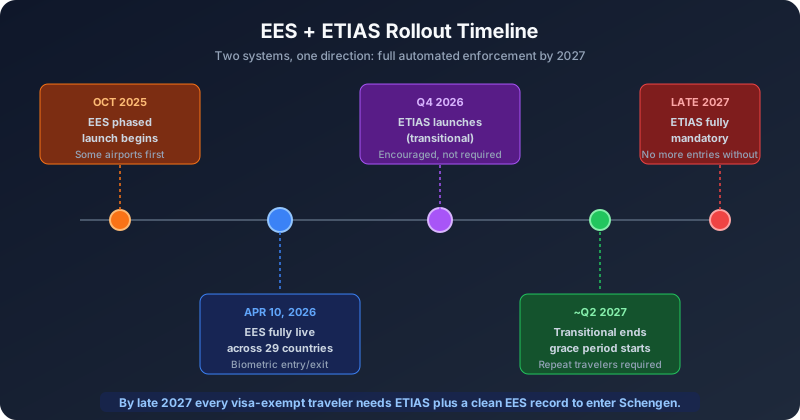
If you carry a US, Canadian, UK, Australian, Japanese, or any other visa-exempt passport and you travel to Europe regularly, two new EU systems are reshaping how your time on the continent gets tracked. The Entry/Exit System (EES) went fully operational on April 10, 2026, and the European Travel Information and Authorisation System (ETIAS) is now confirmed for a Q4 2026 launch.
For digital nomads, this matters more than for the average tourist. The visa-free 90/180 rule is not changing, but the way it gets enforced is changing dramatically. Manual passport stamps are out. Biometric scans, central EU databases, and pre-travel authorizations are in. Here is the practical breakdown of what nomads actually need to know.
What ETIAS Is (And Is Not)
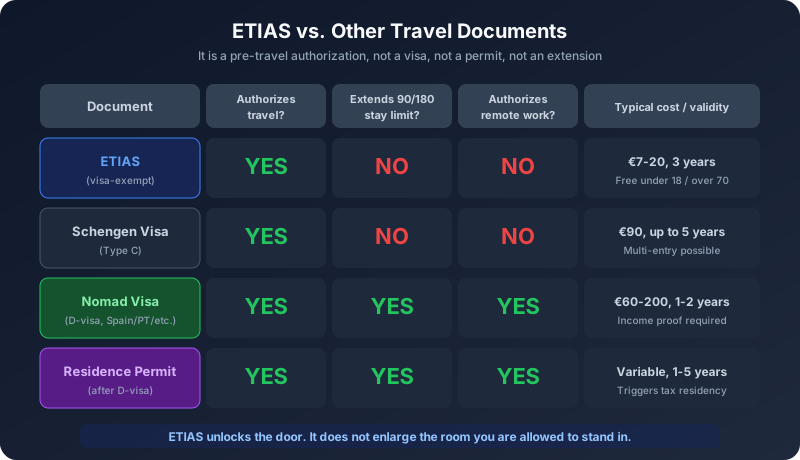
ETIAS is a pre-travel authorization that visa-exempt nationals will need to obtain before traveling to any of the 30 European countries that participate in the system. It is not a visa. It does not grant any new rights. It does not extend the 90/180 day allowance. It is closer in concept to the United States ESTA or Canada eTA: a quick online screening done before you board a flight to Europe.
Think of it as a permission slip to travel, separate from the actual rules that govern how long you can stay once you arrive. The 90 days within any rolling 180-day window allowance remains intact. ETIAS just adds a check before you ever board a plane.
This distinction trips up a lot of nomads. We have seen forum posts and reader emails along the lines of "if I have ETIAS, can I stay longer?" The answer is no. ETIAS authorizes travel; it does not change immigration limits. If anything, the existence of ETIAS plus EES makes your 90/180 count easier for authorities to verify in real time.
When ETIAS Actually Launches
The launch has been delayed multiple times since the original 2021 target. As of April 2026, the official position from the EU is a Q4 2026 start, meaning sometime between October and December. No exact date has been published as of this writing.
After launch there are two important transitional phases nomads should plan around.
The first is a transitional period of at least six months. During this window, travelers will be encouraged but not required to apply. Border guards will still let you in even without an authorization, while the system gets stress-tested at scale.
The second is a grace period of an additional six months after the transitional phase ends. During this grace period, first-time travelers to Europe are allowed in without ETIAS as long as they meet standard entry requirements. But repeat travelers, which describes most digital nomads, do not get the grace period exemption. If you have entered the Schengen Area before, you will need ETIAS as soon as the grace period for first-timers begins.
Practical takeaway: by mid-to-late 2027, ETIAS will be fully mandatory for any nomad who has previously visited Europe.
How EES Already Changed Things in April 2026
While ETIAS is still pending, EES is already live. The Entry/Exit System replaced manual passport stamping across all 29 Schengen member states on April 10, 2026. Every entry and exit by a non-EU traveler is now recorded biometrically: fingerprints, facial image, passport data, and the precise date and time of crossing.
The data sits in a centralized EU database, accessible to border authorities across the zone. When you enter Spain and later try to exit through Germany three weeks later, the system already knows exactly when you came in, where, and how many of your 90 days you have used.
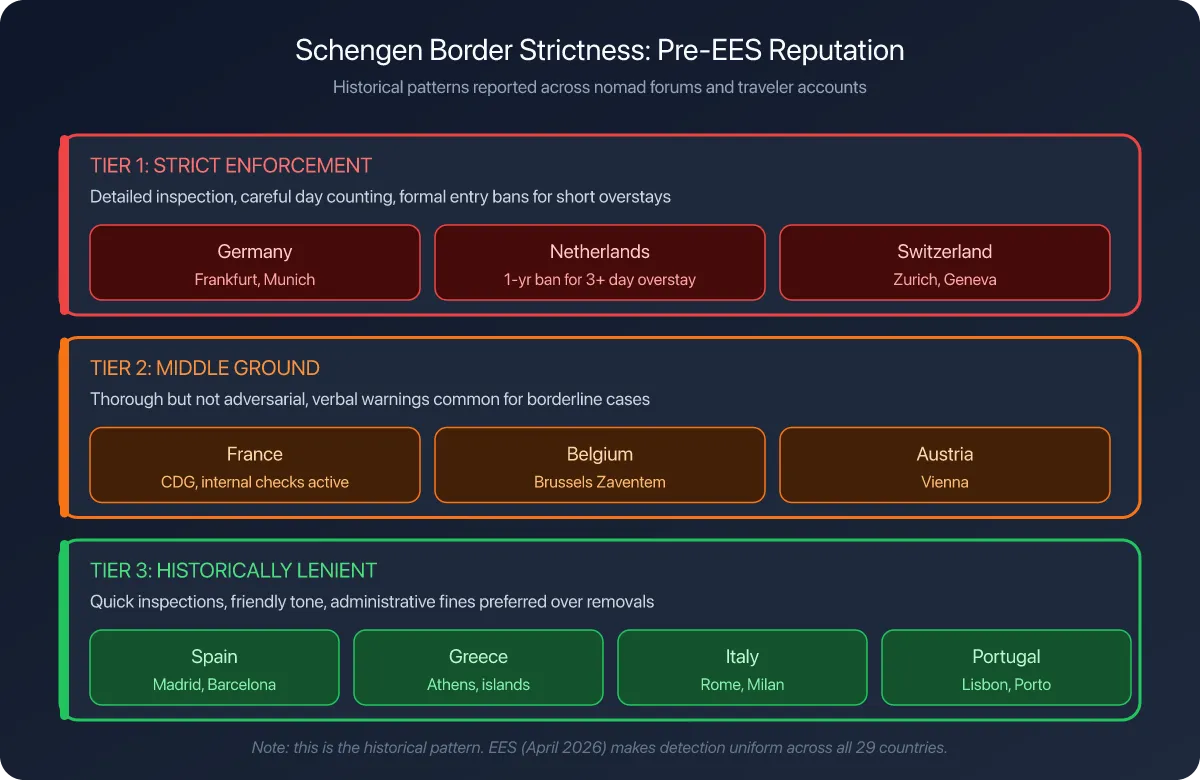
This is the part nomads need to internalize. Pre-EES, an overstay of a few days at a small land border often went unnoticed. The stamps were inconsistent, sometimes missing, and border guards rarely did the rolling-window math by hand. Post-EES, your day count is computed automatically the moment your passport hits the scanner. There is no plausible deniability anymore. What still varies is what each country does once the system flags you, which we mapped in our country-by-country enforcement guide.
The early rollout in October 2025 was rough. Several airports reported system crashes, long queues, and intermittent outages. Member states are allowed to partially suspend EES checks for up to 90 days after full rollout, with a possible 60-day extension, to manage congestion. By mid-2026 most of these growing pains should be behind us, but expect lingering border delays through the summer travel season.
Who Needs to Apply (And Who Does Not)
ETIAS applies to nationals of approximately 60 visa-exempt countries. Your American, British, Canadian, Australian, New Zealander, Japanese, South Korean, Singaporean, Brazilian, Argentine, Mexican, Israeli, and many other passports all fall under this list.
You do not need ETIAS if you hold one of the following:
EU or EEA citizenship. Citizens of the 27 EU member states, plus Iceland, Liechtenstein, Norway, and Switzerland do not need any travel authorization for intra-Schengen movement. As an EU citizen myself, this is the case I write about with the most familiarity, since the entire ETIAS framework simply does not apply to me.
A valid Schengen visa or long-stay D-visa. If you already hold a national long-stay visa from any Schengen country (a Spanish digital nomad visa, a Portuguese D8, a Greek nomad visa, etc.), you do not need ETIAS for the duration of that permit.
A Schengen residence permit. Once you have residency in any Schengen country, you can travel freely within the zone without ETIAS.
For nomads who hold one of those long-stay permits, ETIAS becomes irrelevant. For nomads bouncing in and out of Schengen on visa-free entries, it becomes another required step in the travel checklist.
What ETIAS Actually Costs and Who Is Exempt
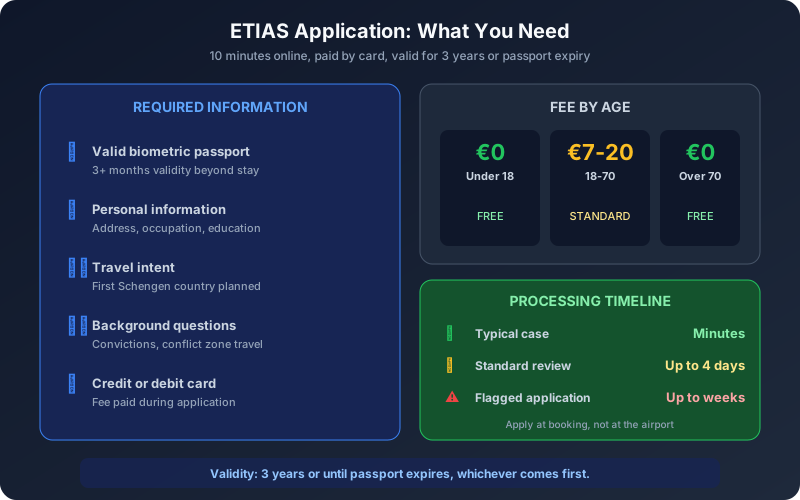
There has been some confusion in the press about the fee. The original announcement set the price at €7. More recent communications from the European Commission have referenced an increase to €20, though as of April 2026 the official EU pages still list the lower number. Either way, this is one of the cheaper travel authorizations in the world, and it is valid for three years or until your passport expires, whichever comes first.
Two groups are fully exempt from the fee:
Travelers under 18 years old. Travelers over 70 years old.
The application itself is online, takes about 10 minutes, and is processed in minutes for most applicants. If your background triggers any flags, it can take up to four days. Edge cases involving prior visa refusals, certain criminal records, or travel to specific conflict zones can take longer or require additional review.
You will be asked for:
A valid passport with at least three months of validity remaining beyond your planned stay.
Personal information including current address, occupation, and education.
Travel intent: which Schengen country you plan to enter first.
Background questions: prior visa refusals, criminal convictions, travel to conflict zones, military service in conflict areas.
The fee is paid by credit or debit card during application.
Common Misconceptions Nomads Fall For
Even before launch, we are already seeing patterns of confusion in nomad communities. Here are the misreadings worth correcting now.
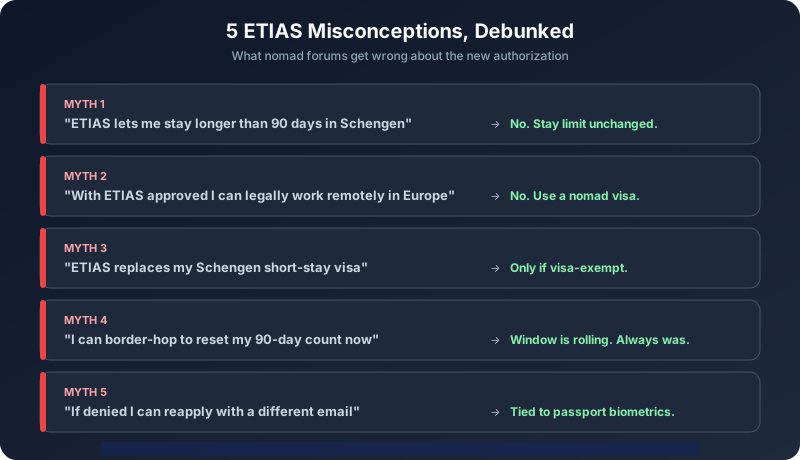
"ETIAS lets me stay longer than 90 days"
It does not. Your stay limit is still 90 days within any rolling 180-day window. ETIAS does not extend, pause, or reset that count.
"If I get ETIAS approved I can work remotely in Europe"
ETIAS is silent on the question of remote work, and the underlying tourist visa-waiver framework that ETIAS sits on top of has always been ambiguous on this point. Most countries treat short-stay visa-free travel as for tourism only, with remote work for a foreign employer existing in a gray zone that is widely practiced and rarely enforced. EES does not change the legal framework, but it does make your patterns of stay visible to authorities. If your travel history starts to look like de facto residency rather than tourism, that visibility increases.
For legal certainty, the actual answer remains a digital nomad visa from Spain, Portugal, Greece, Estonia, Italy, or one of the other countries running formal programs. We compared the main ones, income thresholds and tax treatment included, in our 2026 visa comparison.
"ETIAS replaces my Schengen visa"
Only if you were already visa-exempt. ETIAS is for travelers who currently enter Schengen without a visa. If you carry a passport that requires a Schengen short-stay visa, you still need that visa, and you do not need ETIAS on top of it.
"I can border hop to reset my days now that I have ETIAS"
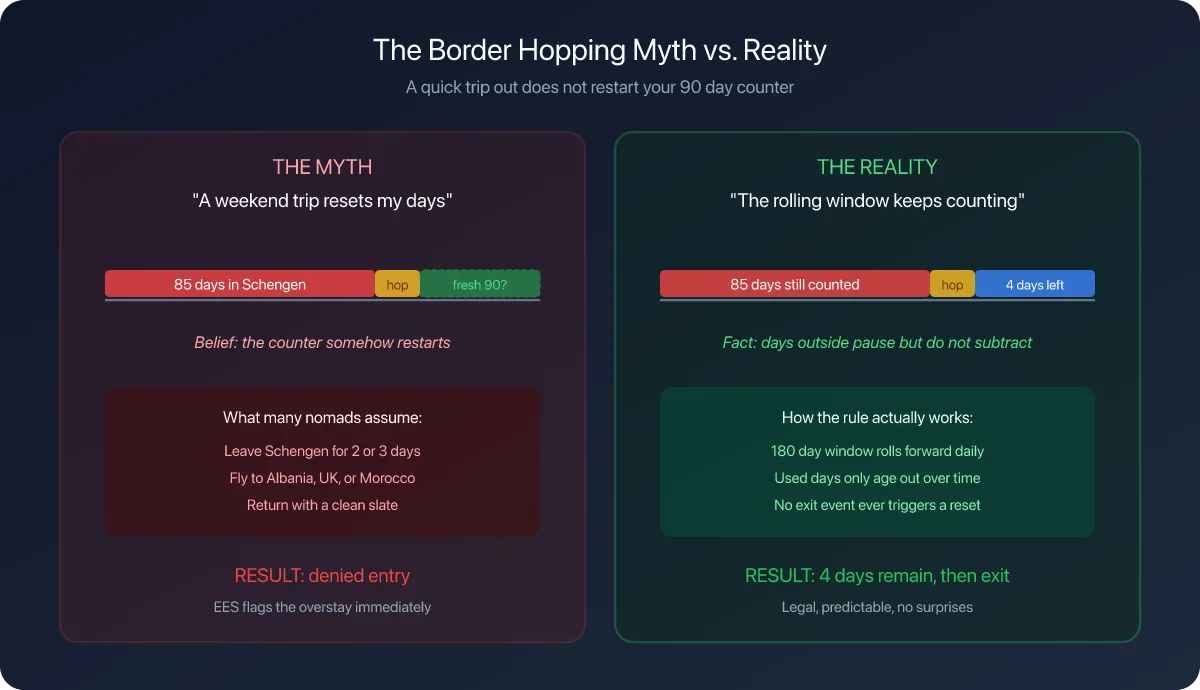
This was wrong before EES, it remains wrong, and EES makes it worse. Leaving the Schengen Area for a weekend in Albania or Turkey does not reset your 90 day allowance. The 180-day window is rolling. We covered the full math in our 90/180 rule guide.
"If I lose my ETIAS approval I can just reapply with a different email"
The system is biometric and tied to your passport. Identity is established at application and rechecked at the border via EES. Trying to game the system is a path to a multi-year entry ban, not a workaround.
What This Means for the Nomad Workflow
The combination of ETIAS plus EES has a few practical implications worth integrating into how you plan trips.
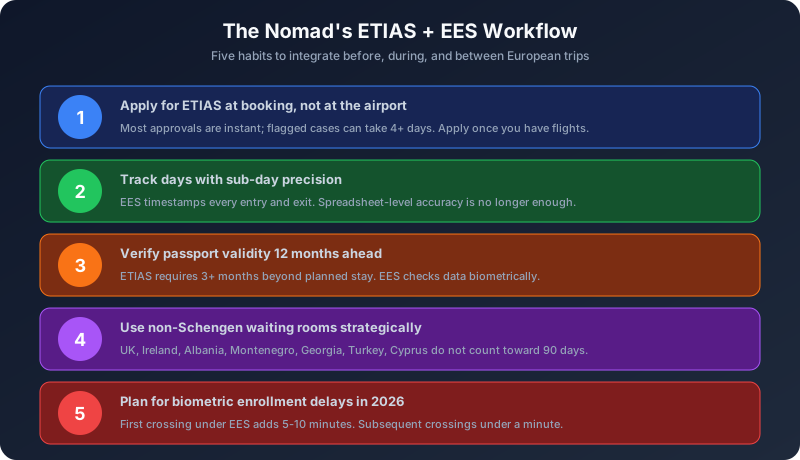
Apply for ETIAS at least a week before travel
Most approvals are instant, but in the rare case your application is flagged, you have up to four days for routine review and potentially weeks for additional documentation. Applying the night before your flight is cutting it dangerously close. Apply when you book the ticket.
Track your days with the kind of precision that matches the new enforcement
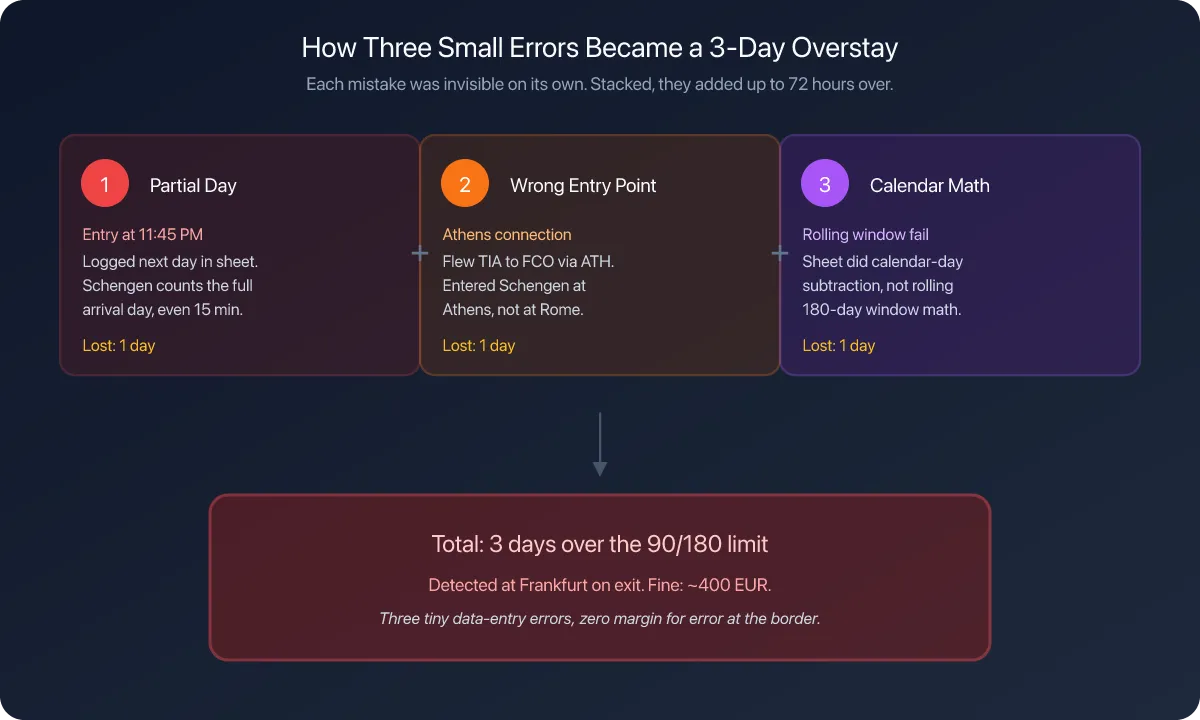
Pre-EES, an off-by-two-days mistake on your spreadsheet would probably never get caught. Post-EES, the system knows your exact entry and exit times, calculated to the minute. The margin for error has collapsed. We built Nomad Tracker's Schengen calculator precisely because this kind of precision is hard to maintain manually across multiple trips.
Verify your passport validity well in advance
ETIAS requires at least three months of passport validity beyond your planned stay. EES checks passport data biometrically. A passport renewal that drags out can derail an entire trip. Check expiration dates 12 months ahead.
Understand which non-Schengen options are still useful
The standard nomad strategy of using non-Schengen Europe (UK, Ireland, Albania, Montenegro, Georgia, Turkey, Cyprus, Bulgaria pre-2025, etc.) as a "waiting room" while your 90 days reset is fully intact. EES does not affect those countries because they are not in the Schengen zone. Note that Bulgaria and Romania are now Schengen members as of 2024, so they no longer count as outside-Schengen waiting rooms. Cyprus remains EU but non-Schengen. Worth being precise about what a waiting room actually does for your count, since a short hop out resets nothing.
Plan for the EES rollout to still be bumpy
Expect longer queues at major airports through summer 2026. First-time travelers under EES sometimes face a 5-10 minute biometric enrollment process. Subsequent crossings are quicker, typically under a minute, but plan accordingly when connecting through major hubs.
The Bigger Picture: Tracking Just Got Mandatory
For years, the laissez-faire reality of Schengen enforcement let casual nomads coast on imprecise day counting. A few extra days here, a missed stamp there, no one was running the math. That era ended on April 10, 2026.
The EU is not building this infrastructure to catch the occasional honest mistake. It is being built because the same systems that flag accidental overstays also flag systematic abuse: people working full time on tourist visas, undeclared tax residents, security threats. But honest nomads get caught in the same net. An overstay you did not realize you committed is still an overstay in the EES record.
The shift here is not really about ETIAS, which is a minor administrative step. It is about EES making your day count public, automatic, and adversarial in nature. The system knows. Your phone needs to know too.
This is exactly the problem Nomad Tracker was built around. Automatic GPS-based day counting, on-device only with zero cloud dependency, real-time Schengen rolling window calculation, and alerts long before you approach your limits. We built it because manual tracking has officially stopped working.
EES is live. ETIAS is coming. Your day count needs to be exact.
Nomad Tracker automates Schengen day counting, fiscal residency monitoring, and visa tracking, all on-device, all private. Available on iOS.
Download on the App Store