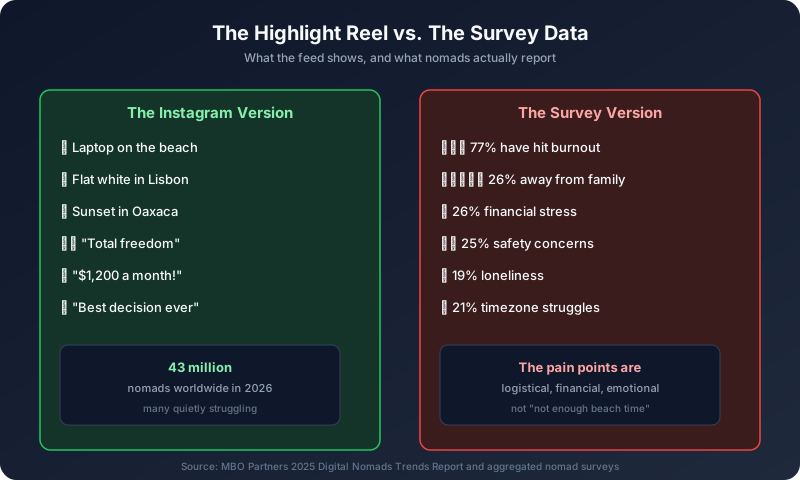
The digital nomad feed is a hall of mirrors. Laptop on a Bali daybed, oat flat white in Lisbon, a sunset in Oaxaca captioned with something about freedom. Roughly 43 million people worldwide now live some version of this life in 2026, and a big chunk of them are quietly having a much harder time than the grid suggests.
This is not a "quit your job and travel the world" piece, and it is not a takedown either. Plenty of people build a genuinely good life on the road. But the marketing has gotten so loud that the actual tradeoffs have been buried, and people arrive unprepared. So here is the other side of the ledger: the parts that actually suck, backed by the survey data rather than the highlight reel.
The Reality Behind the Highlight Reel
Start with the numbers, because they are less flattering than the photos. In the 2025 MBO Partners trends report, the most cited difficulties among digital nomads were being away from family and friends (26%), financial stress (26%), personal safety concerns (25%), travel burnout (23%), timezone struggles (21%), and loneliness (19%). Notice what is missing from that list: "not enough beach time." The pain points are almost all logistical, financial, or emotional.
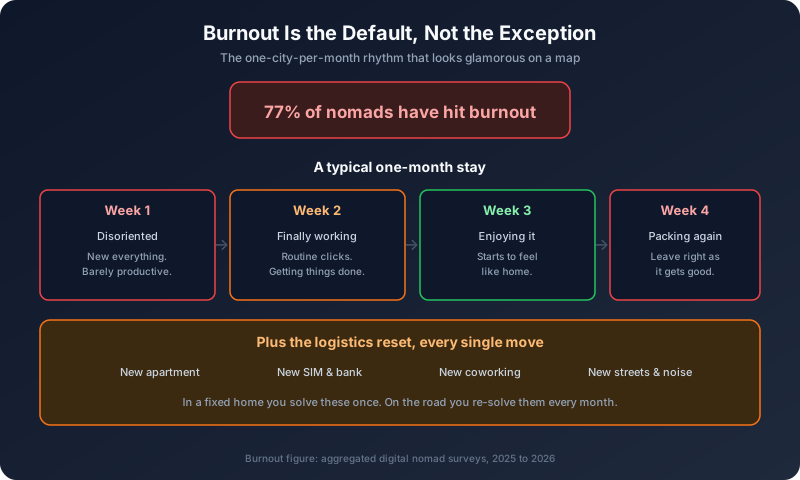
The most striking figure comes from separate survey work: roughly 77% of digital nomads report having experienced burnout. That is not a fringe minority struggling to adapt. That is the overwhelming majority, and it points to something structural rather than personal. If three out of four people in any lifestyle are hitting a wall, the lifestyle itself is doing something to them.
None of this means the life is a scam. It means the version being sold is edited. The unedited version has admin, isolation, and a persistent hum of anxiety running underneath the nice lunches.
The Loneliness Nobody Posts About
Loneliness is the downside that gets the most lip service and the least honesty. Everyone nods along that it is "a thing," then posts a photo of a coworking happy hour and moves on.
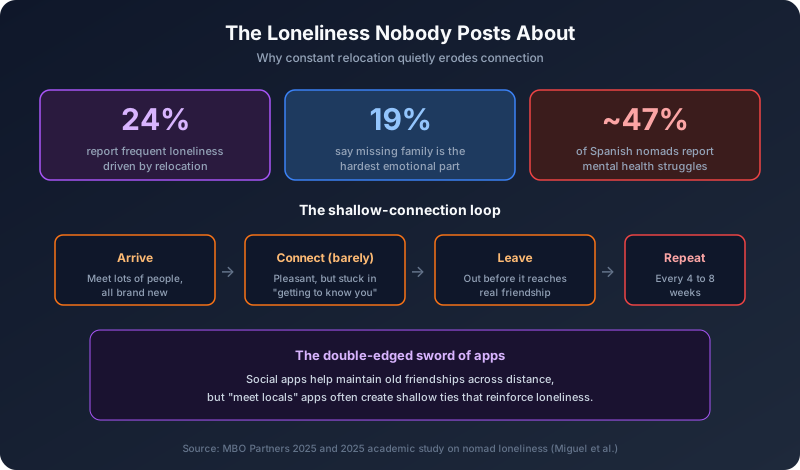
The data is blunter. Around 24% of nomads report frequent loneliness driven specifically by constant relocation, and 19% say missing friends and family is the single hardest emotional part of the lifestyle. A 2025 academic study on nomad loneliness found that the social media tools people lean on to cope are a double-edged sword: they help maintain existing relationships across distance, but apps designed to spark new local connections often produce shallow, disposable interactions that reinforce the loneliness rather than fixing it.
The mechanism is simple once you name it. Real friendship needs repetition and shared time. When you leave every four to eight weeks, you are permanently in the "getting to know you" phase and never reach the "call you when things go wrong" phase. You collect a large number of pleasant acquaintances and a very small number of people who actually know you. For the first year the novelty masks it. By year two, a lot of nomads describe a specific kind of hollowness: surrounded by people, connected to almost no one.
The mental health toll is measurable. In some national samples, close to half of nomads report mental health struggles, with 47% of Spanish and 48% of French nomads flagging it. That is not weakness. It is what happens when you strip out the community scaffolding most people take for granted and replace it with a rotating cast.
Burnout Is the Default Setting, Not the Exception
That 77% burnout figure deserves its own section because most people misunderstand where nomad burnout comes from. They assume it is work burnout, the same overwork you would get at a desk in your home city. It usually is not. It is a second, sneakier kind stacked on top.
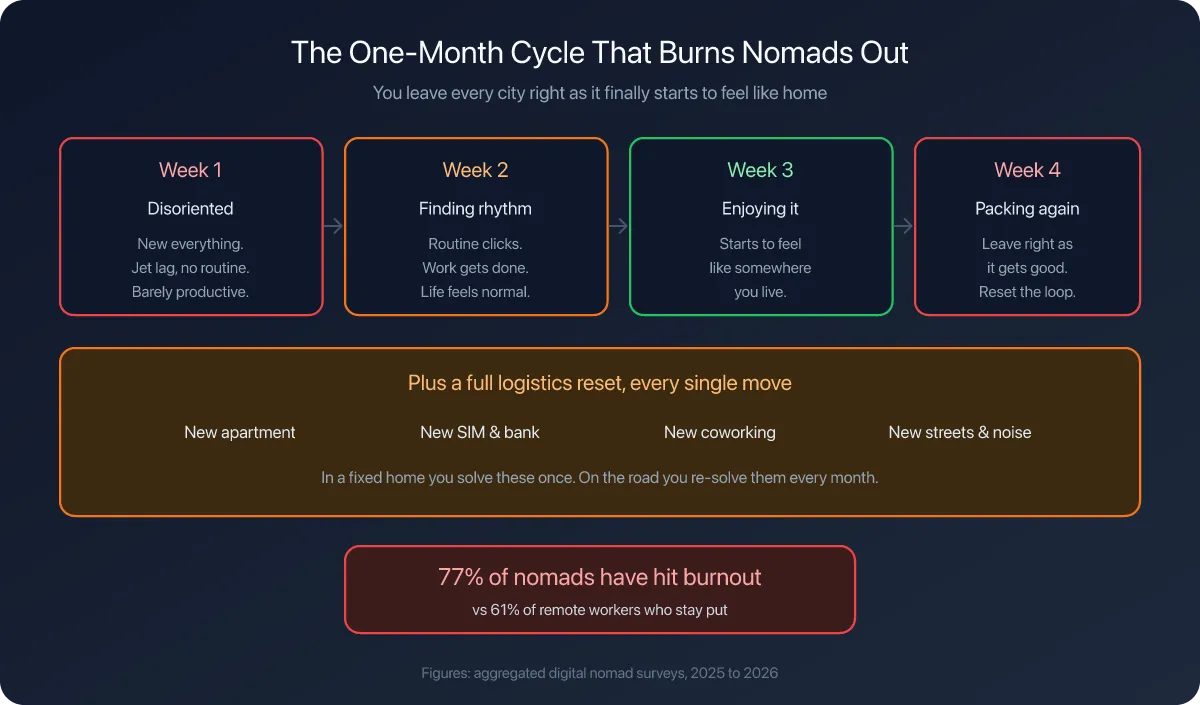
Call it logistics burnout. Every single month resets your baseline. New apartment, new grocery store, new SIM situation, new coworking spot, new bank ATM that may or may not charge you, new set of streets to learn, new noise at 3am you have not identified yet. In a fixed home, all of that is solved once and then runs in the background for years. On the road, you are re-solving the same twenty small problems on a loop, and each one takes a little bite out of the same energy budget you need for actual work.
The classic accelerant is pace. The one-city-per-month rhythm that looks so glamorous on a map is the fast track to exhaustion. You spend the first week disoriented, the second week finally productive, the third week starting to enjoy the place, and the fourth week packing to leave. You never get the payoff of feeling at home because you leave right as it starts. Many long-term nomads eventually slow to three-month stays or a semi-fixed base precisely because the constant churn stops being an adventure and starts being a job you did not apply for. We looked at what that slowdown actually fixes, and what it does not, in our piece on nomad burnout and slow travel.
If you are planning your travel around a hard limit like a visa window or a tax threshold, that pressure compounds the burnout. You are not just tired, you are tired and mentally tracking a countdown. Which brings us to the admin.
The Admin Tax: The Time and Money Nobody Budgets For
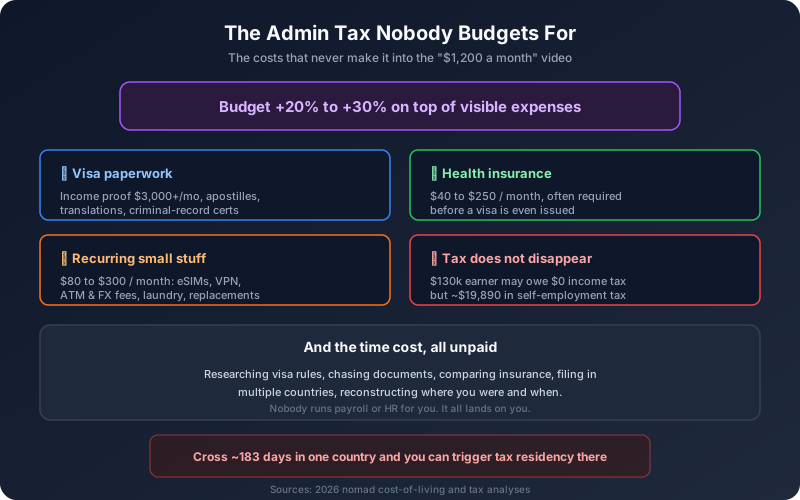
Here is the cost nobody puts in their "I live in Thailand for $1,200 a month" TikTok. The nomad life carries an admin tax, paid in both money and hours, and it is larger than most people expect.
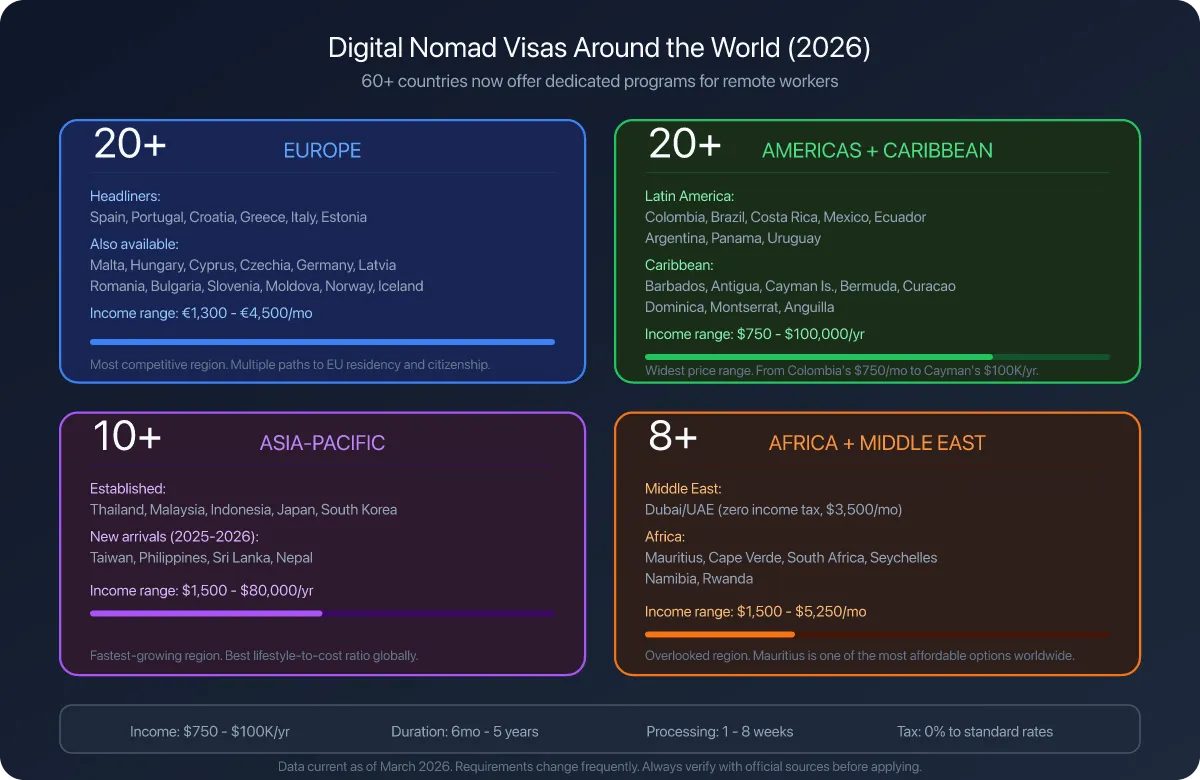
On the money side, the guidance from cost-of-living analysts is to budget an extra 20% to 30% on top of your visible expenses for the hidden stuff: visa fees, insurance, emergency buffers, and currency swings. Digital nomad visas increasingly require proof of income of $3,000 a month or more, plus a stack of supporting paperwork: translations, apostilles, criminal-record certificates, and proof of local health coverage before the visa is even issued. Travel medical insurance runs anywhere from $40 to $250 a month depending on coverage limits. Recurring small stuff (eSIMs, VPNs, ATM and foreign-exchange fees, laundry, replacing the charger you left in the last Airbnb) quietly adds another $80 to $300 a month.
Then there is the tax situation, which is where the "location independent, therefore tax free" fantasy meets reality. You generally still owe tax somewhere, and you can trigger tax residency in a host country after crossing roughly 183 days there. The idea that you can dodge this by never settling anywhere is mostly a myth in 2026. A US freelancer earning $130,000 abroad might exclude their income from federal income tax under the Foreign Earned Income Exclusion and still owe around $19,890 in self-employment tax, because that 15.3% does not disappear just because you changed your view.
The time cost is harder to quantify but just as real. Researching visa rules, filling out applications, chasing documents, comparing insurance, filing in multiple jurisdictions, and reconstructing where you were and when: that is unpaid work, and it lands on you specifically because you chose this life. Nobody is running payroll or HR for you.
The Timezone Trap
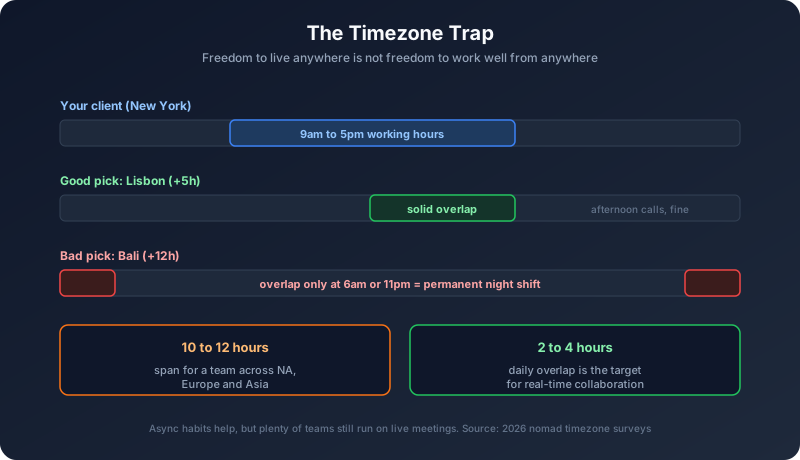
If you work with a team or clients, geography is not just about weather and rent. It is about whether you can actually do your job at a humane hour.
Timezones are consistently one of the most cited operational headaches in nomad surveys, and the math is unforgiving. A team split across North America, Europe, and Asia can span 10 to 12 hours of difference. The commonly cited "good" target is just 2 to 4 hours of daily overlap where everyone is reachable, and hitting even that from the wrong continent means someone is taking calls at 6am or 11pm. Pick a beautiful spot 11 hours off from your main client and you have quietly signed up for a permanent night shift.
The 2026 workplace has adapted somewhat. "Remote-first" is now standard in job ads, and strong async habits (recorded updates, shared docs, clear response-time expectations) genuinely reduce the pain. But async is a skill, not a default, and plenty of teams still run on real-time meetings. If yours does, your location choices are constrained in a way the travel influencers rarely mention. Freedom to live anywhere is not the same as freedom to work well from anywhere.
The Low-Grade Anxiety of Visa Math
Underneath everything else runs a specific, quiet stress that people who have never done this do not anticipate: the constant background calculation of how many days you have left. How many Schengen days are gone. Whether that weekend in Italy pushed you over. Whether staying "just a few more weeks" in one country flips you into tax residency. Whether your entry stamp said the date you think it did.
For non-EU nomads in Europe this is sharpest, because the Schengen 90/180 rule is a rolling window that is genuinely hard to compute in your head, and the new Entry/Exit System makes overstays trivially detectable at the border. But it is not just a Europe problem. Any nomad chasing or avoiding a 183-day tax line is carrying the same mental load. It is low-grade, it is always on, and it taxes the same attention you would rather spend on your work or, you know, enjoying the place you traveled so far to see.
This is the part we think about most, because it is the part that turns a great lifestyle into a source of dread, and it is the most fixable. The loneliness and the pace are things you manage with better choices. The day counting is a problem software should simply solve for you, so it stops living in your head.
So Should You Still Do It?
Yes, probably, if you go in with clear eyes. The point of laying all this out is not to talk you off the road. It is to kill the fantasy version so the real version has a chance.
The nomads who last are the ones who treat these downsides as design problems instead of personal failings. They slow down, staying two or three months per place instead of one, so friendships have time to form and the logistics reset less often. They pick bases with workable timezone overlap instead of chasing the prettiest feed. They build a real budget with the 20% to 30% admin buffer baked in, so a visa renewal or an insurance claim does not blow up the month. And they automate the tracking, so the visa and tax math is a glance instead of a gnawing worry.
Done that way, the life delivers on a lot of its promise. Done the Instagram way, it burns most people out inside two years. The difference is almost entirely in whether you took the boring parts seriously before you booked the first flight.
Take the visa math off your mind.
Nomad Tracker handles the part of nomad life that causes the most quiet stress: it counts your Schengen days automatically, watches your per-country tax thresholds, and lets you simulate future trips with Ghost Trips before you book them. All on-device, all private.
Download on the App Store